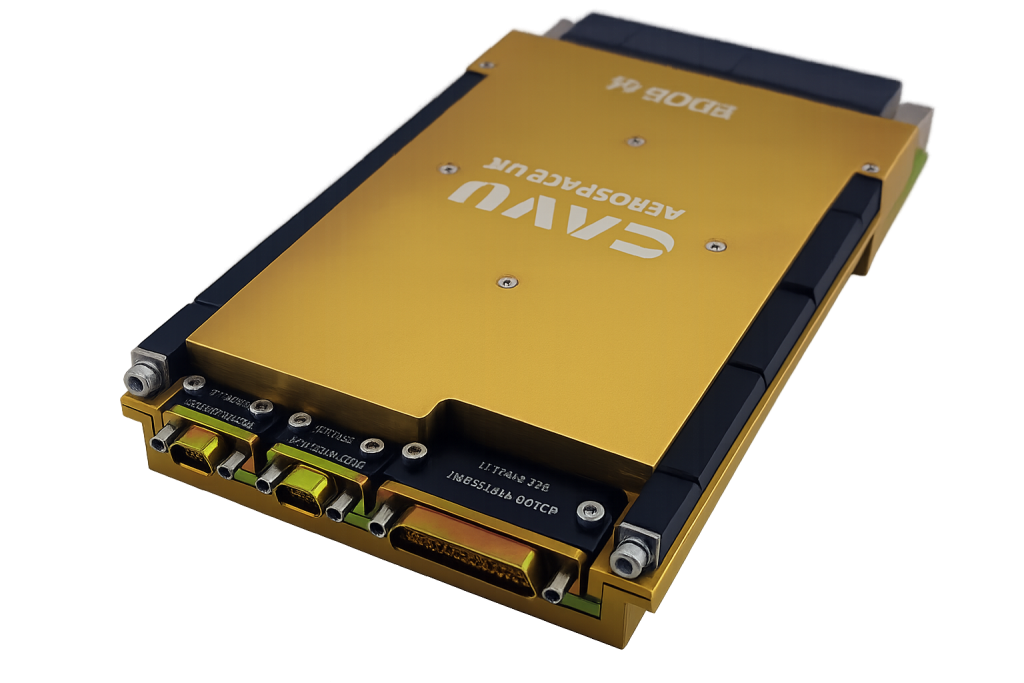
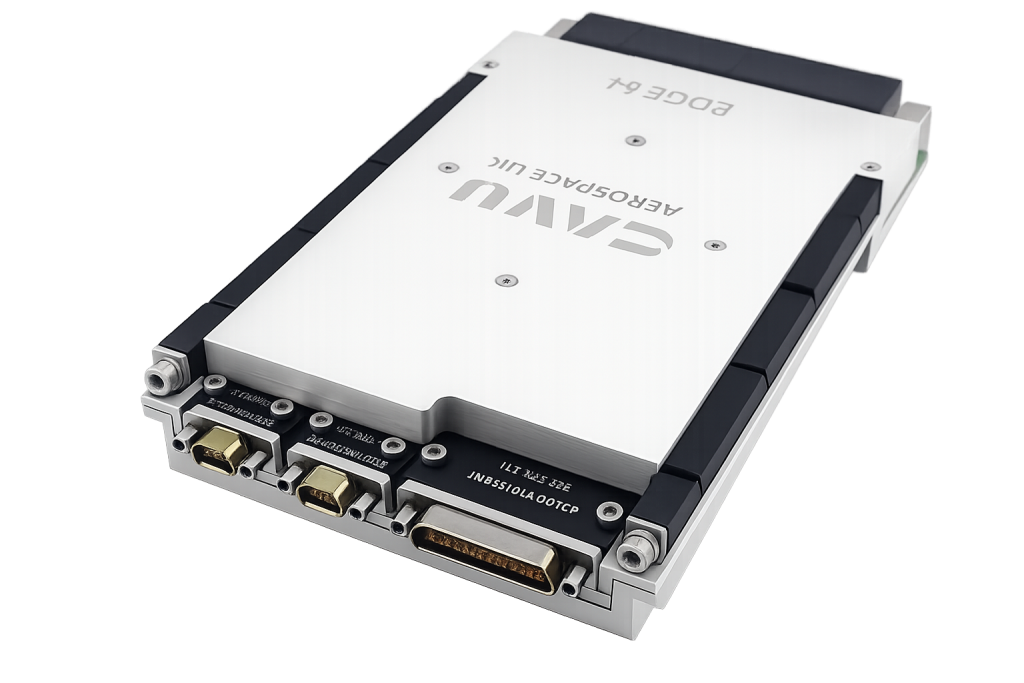
OBC-64
Ultimate onboard computing based on Microchip PIC64
OBC-64
Ultimate onboard computing based on Microchip PIC64
PIONEERING SPACECRAFT COMPUTING
We are pioneering the next generation of spacecraft avionics with our new Onboard Computer (OBC) built around Microchip’s cutting-edge PIC64 architecture. As an official Microchip Design Partner and a participant in the High-Performance Spaceflight Computing (HPSC) program, we benefit from early access to PIC64 technology—allowing us to engineer a robust, radiation-tolerant, and high-performance OBC platform designed for the most demanding space missions. Our mission is simple: deliver reliable, intelligent, and future-proof onboard computing capabilities for modern spacecraft and aerospace systems.
Powered by Microchip PIC64 – leveraging early-access silicon for advanced performance and reliability.
Radiation-tolerant architecture designed for harsh space environments.
High-speed data handling with next-gen interfaces for payloads, sensors, and spacecraft systems.
Modular, scalable platform adaptable to LEO, MEO, GEO, and deep-space mission profiles.
Designed with aerospace-grade robustness for long-duration missions and mission-critical operations.
Backed by Microchip Design Partner expertise ensuring tightly integrated hardware and firmware solutions.
Built within the HPSC ecosystem, aligning with the future standards of spaceflight computing.
KEY FEATURES
- Processor: PIC64-HPSC1000 / PIC64-HPSC1100
- 8× RISC-V SiFive® X280 vector cores + S7 system controller
- Performance: ~26K DMIPS class; up to 2 TOPS (INT8) / 1 TFLOPS (bf16) (device-level headline)
- Memory / storage: DDR4 ECC; eMMC / NAND / NOR / QSPI; MRAM/FRAM options
- High-speed I/O: 10GbE/TSN, PCIe Gen3 ×8 (CXL-capable at silicon level)
- SpaceWire: up to 7 ports (RMAP-compatible; 10–200 Mbps)
- Software: Linux®, RTEMS, Xen / partitioning support
- Security / partitioning: hardware domain isolation (WorldGuard) for mixed-criticality workloads
BUDGET
- Form factor: 3U SpaceVPX
- Dimensions: ~100 × 160 × 25 mm
- Mass: ~650 g incl. conduction plate & housing
- Power: 8–15 W typical; up to 25 W peak
ADD-ON CARDS
• Ethernet / networking cards
• High-speed ADC and DAC cards
• High-capacity storage cards
• Power distribution cards
• Backplane boards supporting multiple card counts and topologies
WHY OBC-64
- Autonomy-ready compute: 8× RISC-V vector cores + integrated system controller for mixed-criticality architectures.
- Deterministic high-speed networking: TSN Ethernet switching fabric plus low-latency data movement features for multi-SBC scaling.
- Payload-grade I/O: PCIe Gen3 expansion, SpaceWire, and storage options to match mission data profiles.
- Radiation-tolerant roadmap: RT and RH device classes to align cost/assurance with mission needs.
APPLICATIONS
- Deterministic Spacecraft Data Backbone Node
- Onboard Payload Processing and High-Rate Sensor Ingest
- Autonomous Surface Operations (Lunar/Mars Rovers, Landers, Habitats)
- Precision Landing, Terrain Relative Navigation, and Hazard Avoidance Compute
- Distributed / Clustered Avionics (Multi-SBC Scaling with RDMA/RoCEv2)
- High-Reliability Fault-Managed Platform Services (FDIR, Health Monitoring, Supervisory Control)
SPECIFICATIONS
PROCESSOR / COMPUTE
- PIC64-HPSC1000 / PIC64-HPSC1100 family (RISC-V vector compute)
- Mixed-criticality support via hardware partitioning (WorldGuard domains)
- Virtualization / safety architectures supported (project dependent)
MEMORY / STORAGE (CONFIGURABLE)
- DDR4 ECC memory, up to 16 GB
- Boot & mass-memory options: QSPI/NOR, NAND, MRAM/FRAM
- Optional “multiple image / boot region” architecture
HIGH-SPEED NETWORKING / FABRICS
- TSN Ethernet switch fabric (up to 240 Gbps aggregate switching capability)
- Low-latency multi-node scaling via RDMA over Converged Ethernet (RoCEv2) (where implemented)
- PCIe Gen3 expansion (x8 option); silicon supports CXL 2.0 capability
SPACECRAFT INTERFACES
- SpaceWire ports (RMAP-compatible; internal routing at silicon level)
- Additional mission I/O via VPX backplane mapping and mezzanine/expansion options
ENVIRONMENT / RELIABILITY:
- Radiation:
- Radiation-Tolerant (RT): ~50 krad (Si) TID class;
- Radiation-Hardened (RH): ~100 krad (Si) TID class;
DELIVERABLES (TYPICAL)
- SBC + conduction plate / housing
- Software enablement package (BSP/boot chain per program scope)
- ICD / pin mapping + bring-up notes
PRODUCT DOCUMENTS
- Failure Modes, Effects, and Criticality Analysis (FMECA)
- Reliability Analysis Report
- Radiation Analysis Report
- Safety Assurance Plan
- Fault Tree Analysis (FTA)
- Single Point Failure Analysis (SPFA)
- Worst Case Analysis (WCA)
- Derating Analysis Report
- Availability Analysis Report
- Mechanical Analysis Report
- Maintainability Analysis Report
- Fault Detection, Isolation, and Recovery (FDIR)
- Qualification Test Plan (QTP)
- Environmental Test Reports, TVAC, Vib.
- EMC/EMI Test Report
- Radiation Test Report
- Operational Risk Assessment (ORA)
- Critical Items List (CIL)
- Materials, Processes, and Mechanical Parts List (MPMPL)
- Product Assurance Plan (PAP)
- Configuration Item Data List (CIDL)
- End Item Data Package (EIDP)
- As-Built Configuration List (ABCL)