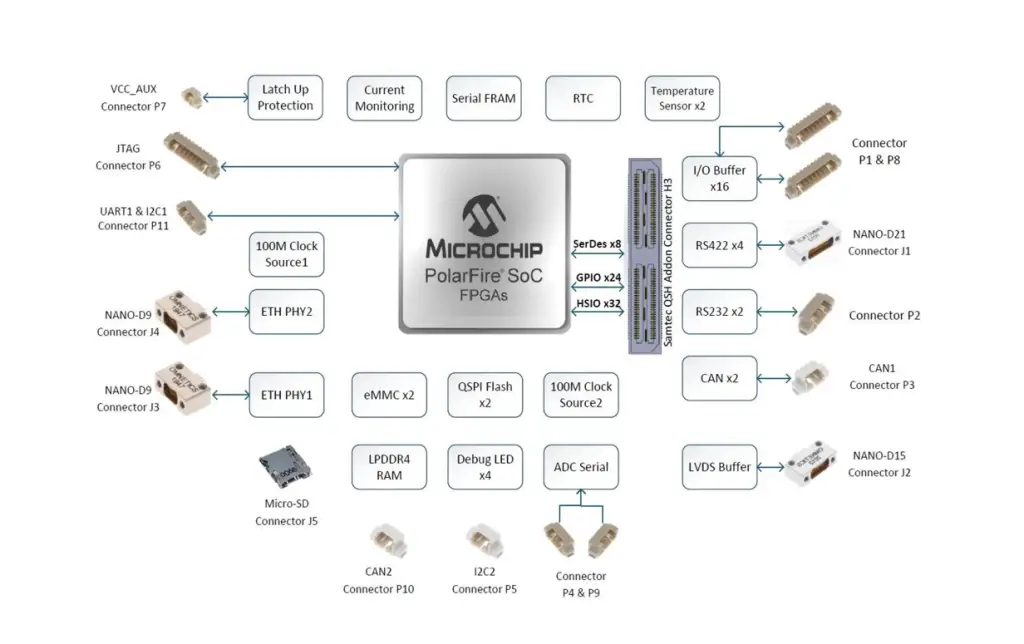
Why Interface Capability in an On-Board Computer Matters
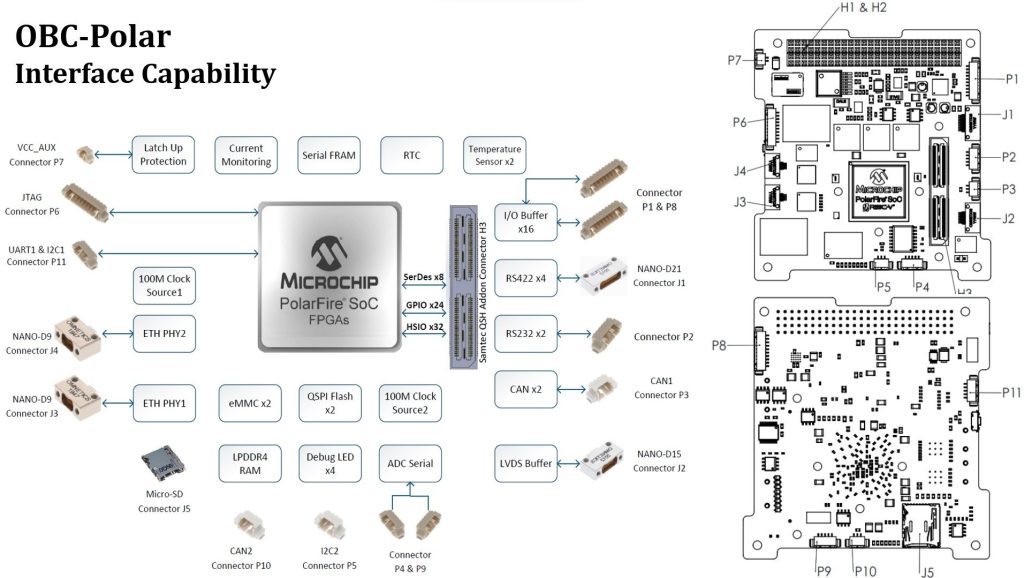
In any spacecraft, the on-board computer acts as the central nervous system, coordinating payloads, avionics, communications, and power systems. Its interface capability is therefore a defining factor in overall mission performance, reliability, and integration effort.
Connecting Every Subsystem
Modern spacecraft integrate a wide range of devices—cameras, sensors, star trackers, radios, reaction wheels, and power controllers—each using different communication standards. An OBC with support for multiple interfaces such as CAN, RS-422/RS-232, LVDS, Ethernet, I²C, UART, and GPIO enables direct, clean connections to these subsystems without additional converters or custom electronics.
Supporting High-Performance Payloads
High-data-rate payloads, including advanced imaging systems and software-defined radios, depend on fast and deterministic interfaces. High-speed links such as LVDS and Ethernet ensure that large data streams can be transferred reliably to memory or downlink systems without bottlenecks.
Enhancing Reliability and Redundancy
Multiple interface options allow system architects to implement redundant buses and fallback communication paths, improving fault tolerance and mission robustness—critical in environments where physical intervention is impossible.
Increasing Mission Flexibility
A highly configurable interface architecture allows the same OBC platform to be reused across different missions and spacecraft classes, from CubeSats to larger satellites, while adapting easily to new payload requirements.
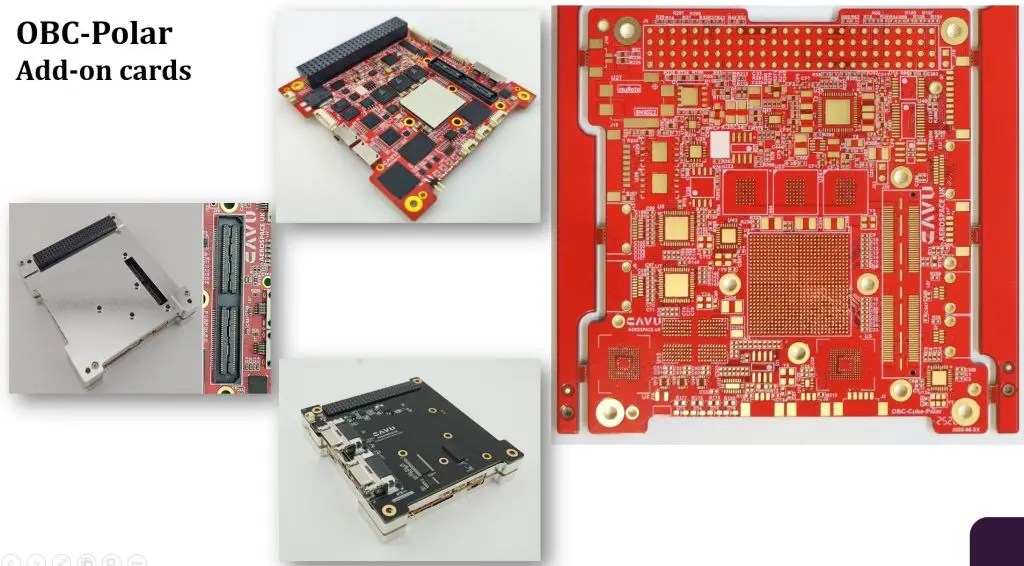
With its extensive and carefully engineered interface capability, OBC-Cube-Polar provides a flexible and future-ready computing backbone for modern space missions—simplifying integration, enabling high-performance payloads, and increasing overall system reliability.