
Temperature Channel Architecture and Sensor Grouping in Thermal Control Units
- February 20, 2026
- CAVU Aerospace UK
Temperature Control Units (TCUs) are frequently required to interface with multiple temperature sensor types, including thermistors, RTDs (3-wire and 4-wire), and thermocouples (Type T and Type K). While it is technically feasible to design universal per-channel analog front-ends capable of supporting any sensor type, doing so in systems exceeding 100 channels introduces substantial PCB area, routing complexity, power overhead, and cost penalties.
This article explains why sensor grouping is the optimal architectural choice for high-channel-count TCU systems and outlines the required input definition needed for proper system partitioning across ports T-01 through T-04.
Multi-Sensor Support in a TCU
A modern TCU may need to interface with:
- Thermistors (typically NTC)
- RTDs
- 3-wire configuration
- 4-wire configuration
- Thermocouples
- Type T
- Type K
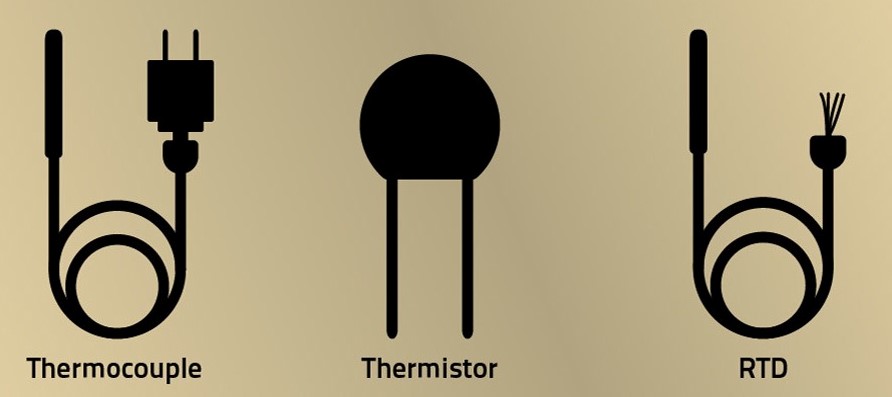
Each sensor type requires a fundamentally different analog front-end:
|
Sensor Type |
Measurement Method |
Front-End Requirements |
|
Thermistor |
Resistance measurement |
Precision current source, voltage divider, ADC |
|
RTD (3-wire) |
Ratiometric resistance |
Current excitation, lead compensation circuitry |
|
RTD (4-wire) |
Kelvin resistance |
Dual current/voltage sense paths |
|
Thermocouple |
µV-level voltage |
Low-noise amplifier, cold junction compensation |
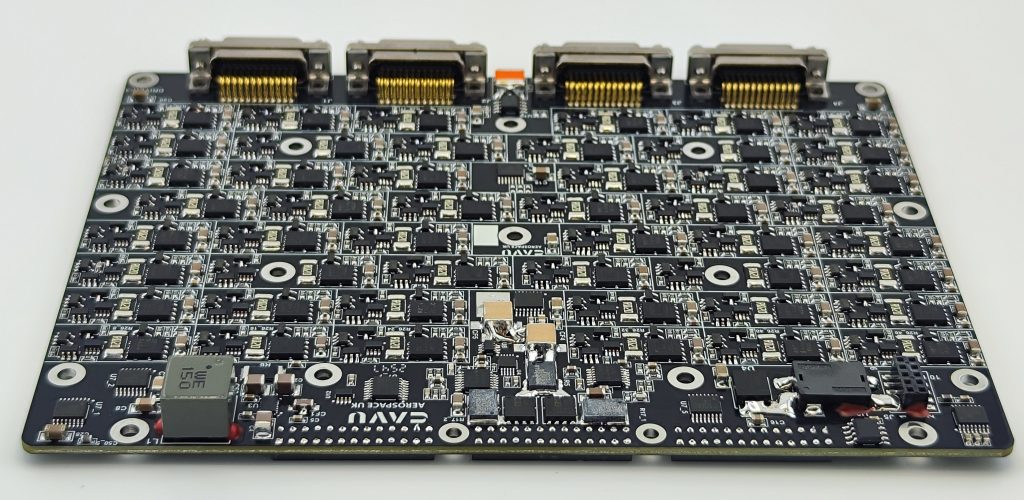
Because the signal conditioning differs significantly, a universal channel architecture becomes impractical at high density.
Why Per-Channel Universal Front-Ends Are Not Practical
In theory, each channel could include:
- Analog multiplexers for sensor type selection
- Programmable current sources
- Switchable gain instrumentation amplifiers
- Configurable filtering networks
- Cold junction compensation support
However, implementing this across 100+ channels results in:
PCB Area Explosion
- Each channel would require additional analog switches and routing
- Guarding and separation for thermocouple microvolt signals increase layout constraints
- High-density analog routing becomes extremely complex
Increased Noise and Reduced Accuracy
- Analog switching networks introduce leakage and offset errors
- Crosstalk becomes more difficult to control
- Thermocouple measurements (µV-level) are particularly sensitive
Channel Count Reduction
Most critically:
If extensive per-channel selection circuitry were implemented, the available channel density would drop dramatically.
In practical terms:
A system intended for >100 channels would likely be reduced to well below ~32 channels if fully universal front-end circuitry were implemented per channel.
This defeats the purpose of high-density acquisition.
Grouped Channel Architecture
The scalable solution is sensor grouping.
Instead of allowing every channel to support every sensor type, the TCU groups channels by sensor type and assigns dedicated conditioning blocks per group.
Advantages:
- Optimized analog performance
- Reduced PCB area
- Higher channel density
- Lower power consumption
- Improved signal integrity
Simplified qualification and validation
Port-Based Grouping Strategy
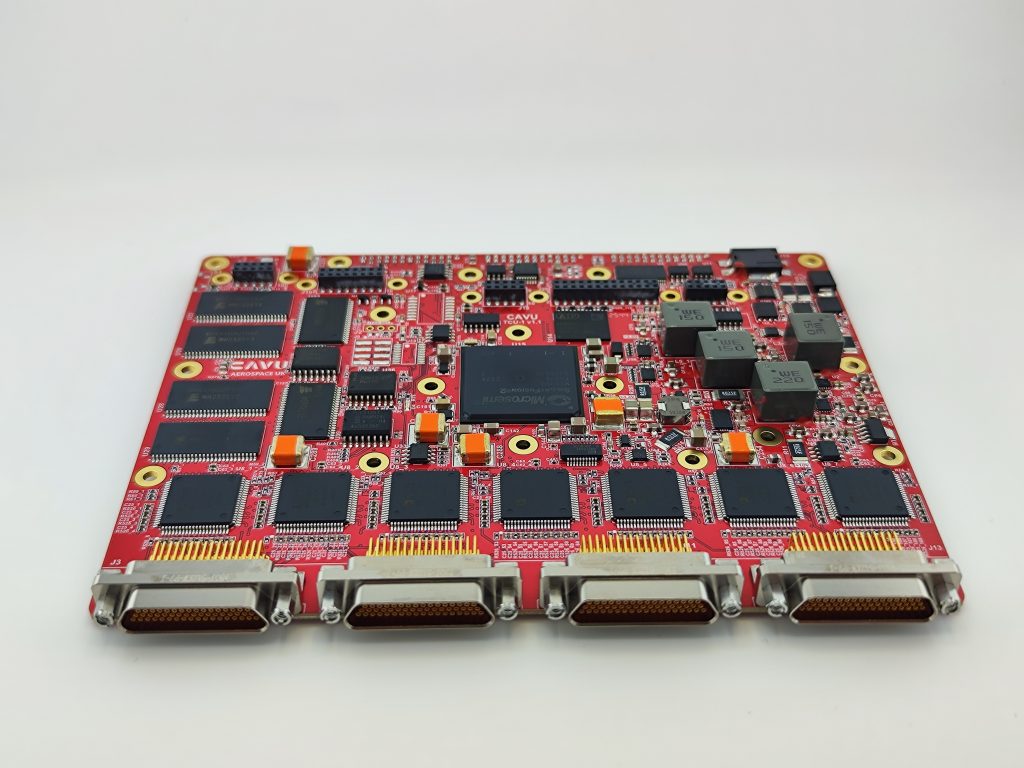
Channels will be grouped across the following ports:
- T-01 Thermistors
- T-02 RTDs (3-wire)
- T-03 RTDs (4-wire)
- T-04 Thermocouples
Each port (or sub-group within a port) will be dedicated to a defined sensor type. Final allocation depends entirely on system requirements.
Required Input from System Integrator
To properly configure the TCU hardware architecture, the only required information is:
Number of Channels per Sensor Type
- thermistors
- RTDs (3-wire)
- RTDs (4-wire)
- thermocouples Type T
- thermocouples Type K
Once these quantities are defined, the channels will be optimally grouped across T-01 to T-04 to maximize density and performance.