
How effectively NVIDIA Jetson chips can be operating in GEO radiation?
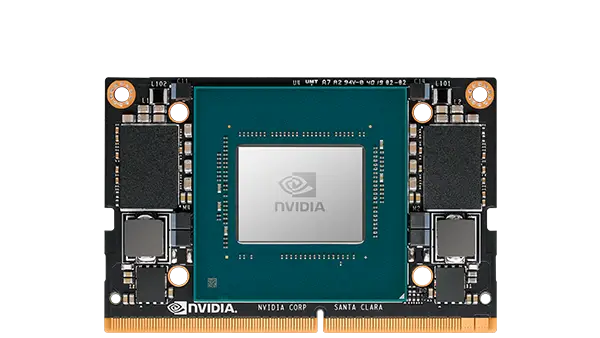
Here is three primary architectures for edge computers, Microchip PolarFire FPGA paired with NVIDIA Jetson:
- PolarFire SoC + NVIDIA Jetson Xavier NX
- PolarFire SoC + NVIDIA Jetson AGX Xavier
- PolarFire SoC + NVIDIA Jetson AGX Orin
All three platforms are based on technologies with existing LEO flight heritage, and their radiation behavior has been characterized through public ESA / ESA-funded test campaigns (proton, heavy-ion, and total ionizing dose), supplemented by system-level experience with high-performance COTS processing in space.
Radiation Tolerance – Reference Numbers and Assumptions
To be explicit, the radiation figures below should be interpreted as device-level, largely unshielded reference values, derived from published campaigns and conservative engineering extrapolation where direct data is not available.
Jetson Xavier NX
- Biased Total Ionizing Dose (TID): ~20–25 krad(Si) (unshielded reference)
- Unbiased survival demonstrated: ≥50 krad(Si)
- Dominant failure mode: SEFI (recoverable hang/reset)
- No destructive latch-up observed below GEO-relevant LET levels
Jetson AGX Xavier
- Same silicon generation (12 nm FinFET) and microarchitecture as Xavier NX
- Biased TID: ~20–25 krad(Si) (engineering equivalence to NX)
- Unbiased survival: ≥50 krad(Si)
- Higher SEFI event rate expected due to larger die area and higher activity
Jetson AGX Orin
- Newer silicon node with improved TID margin observed
- Biased TID (unshielded reference): ~35–40 krad(Si)
- Unbiased survival expected: ≥50 krad(Si) and beyond
- SEE behavior remains SEFI-dominated and recoverable
Shielding Context (System-Level Perspective)
All values above represent unshielded reference points. In practice, shielding dominates the mission-level TID outcome.
Using representative aluminum shielding models:
- Increasing from ~2 mm to ~4 mm Al equivalent typically reduces total dose by ~≈2×
- Increasing from ~4 mm to ~8 mm Al equivalent provides incremental improvement (~≈1.2–1.4×)
This reflects the well-known diminishing returns of aluminum shielding due to secondary radiation effects. Alo for GEO-class products, we selectively employ radiation-tolerant components where they provide clear system-level benefit, particularly in supervisory and mission-critical paths. This includes the use of PolarFire RT FPGA devices for system control and fault supervision, as well as radiation-tolerant power management, memory, and non-volatile storage components where appropriate.