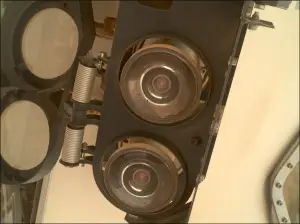
19 Optical Payloads on Perseverance Rover for Entry, Descent & Landing
These three cameras captured Perseverance’s descent to the Martian surface, helping engineers reconstruct the landing and engaging the public:
1. Aeroshell “Up‑Look” Camera A – Views parachute deployment.
2. Aeroshell “Up‑Look” Camera B – Alternate view of parachute inflation.
3. Descent Stage “Down‑Look” Camera – Looks down at rover and terrain during descent.
Navigation & Hazard Cameras (Engineering)
These help the rover drive safely and autonomously and avoid obstacles
4–5. Navigation Cameras (Navcams) – Stereo color cameras on the mast for terrain mapping and driving decisions.
6–11. Hazard Avoidance Cameras (Hazcams) – Six wide‑angle cameras (four front, two rear) that detect rocks, slopes, trenches and other hazards near the rover’s path.
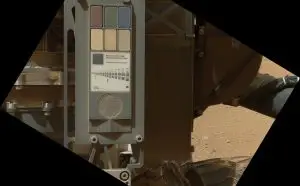
Science & Context Imaging Cameras
Mast‑Mounted Cameras
12–13. Mastcam‑Z (Left & Right) – Mast‑mounted, zoomable stereo cameras that take high‑resolution color images and panoramas of the surface and help select sampling sites.
14. SuperCam RMI (Remote Microscopic Imager) – Part of the SuperCam instrument; provides close‑up imaging of rocks and soils to support chemical and mineral analysis.
Arm‑Mounted Science Cameras
- CacheCam – Monitors the sample caching system, documenting rock core collection and storage.
- SHERLOC ACI (Advanced Context Imager) – Context imaging for the SHERLOC instrument, capturing high‑resolution views of the rock/soil surface.
- SHERLOC WATSON Camera – Color camera on SHERLOC’s turret that provides detailed imagery for geology and context.
- PIXL MCC (Micro Context Camera) – Provides very close up imagery to support PIXL’s X‑ray elemental analysis.
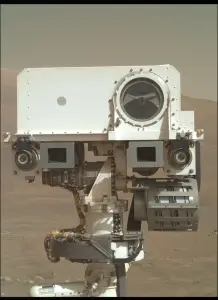
Environmental & Engineering Cameras
- SkyCam – Part of the meteorology suite (Mars Environmental Dynamics Analyzer), this camera looks up at the sky to image clouds, dust, and atmospheric features.
You can have latest captures here: https://mars.nasa.gov/mars2020/multimedia/raw-images/