
Flight-Proven CubeSat Camera with Edge AI Capability
High-Resolution Space Imaging Meets Onboard Artificial Intelligence
- August 13, 2026
- CAVU Aerospace UK
Modern Earth-observation and space-imaging missions are increasingly moving toward intelligent payloads capable of processing imagery directly onboard the spacecraft. Instead of transmitting large volumes of raw image data to the ground, satellites can use onboard AI to detect, classify, track and analyse objects in real time.
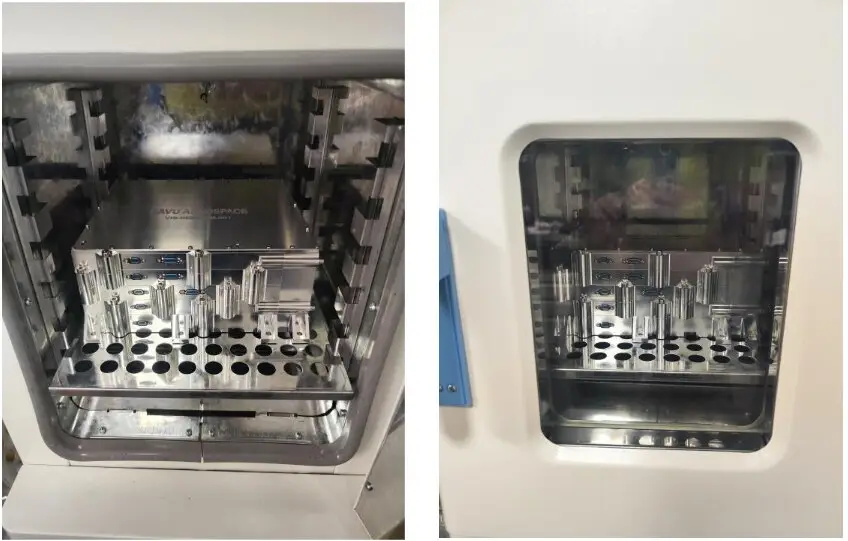
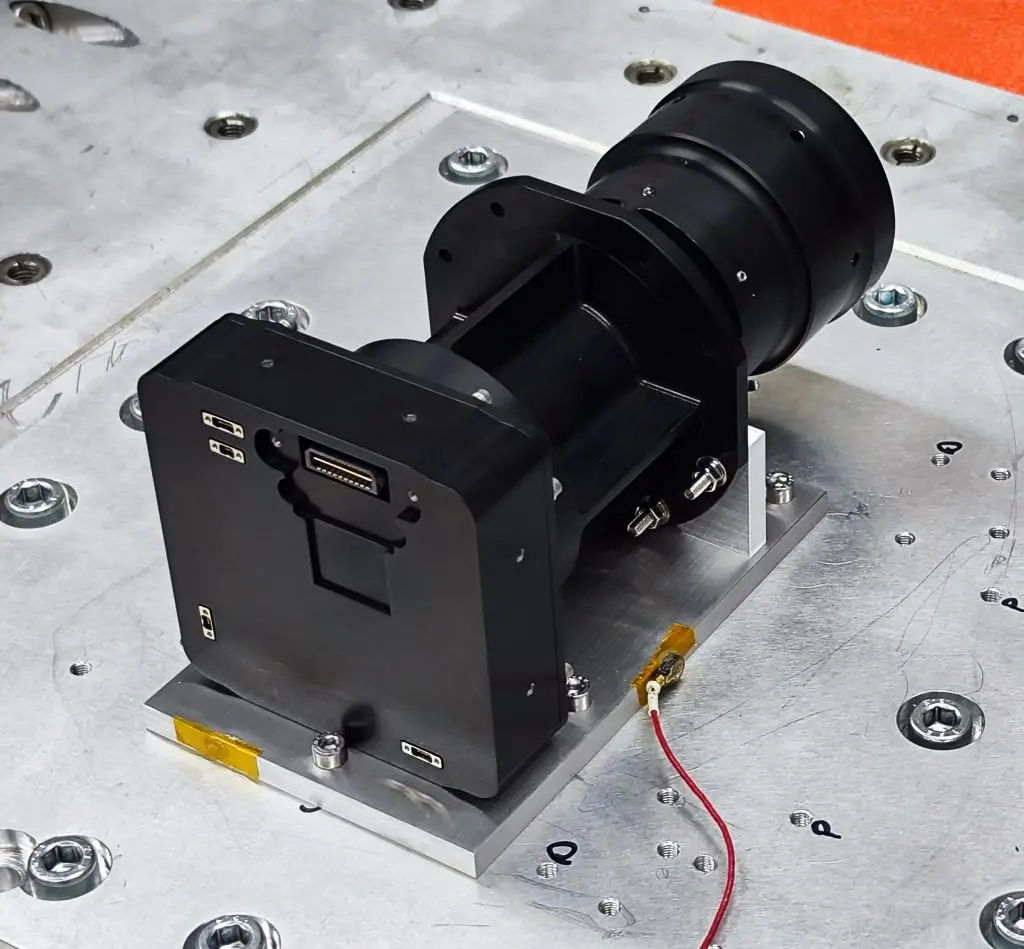
Our flight-proven CubeSat camera combines high-resolution imaging, RavenEye5 high-speed data interfaces and direct integration with NVIDIA Jetson Xavier NX, enabling the development of compact and powerful spaceborne Edge AI imaging systems. The camera has successfully completed a comprehensive environmental and performance test campaign, including EMC, vibration, thermal-vacuum, burn-in and optical performance testing, providing a strong foundation for integration into demanding CubeSat and small-satellite missions.
High-Resolution RAW Imaging
The camera provides a 2448 × 2048 pixel image resolution with 12-bit RAW output using a GBRG Bayer configuration. At full resolution, the camera supports imaging at up to 10 frames per second (FPS). This provides a substantial stream of high-quality image data for applications ranging from Earth observation and spacecraft inspection to object detection and autonomous navigation.
The RAW data output preserves the information captured by the image sensor, giving downstream processing systems maximum flexibility for image correction, enhancement and AI analysis.
Region of Interest for Higher Frame Rates
For applications that do not require the complete sensor area, the camera supports Region of Interest (ROI) operation. By selecting a smaller portion of the image sensor, the system can increase the available frame rate while reducing the amount of data that needs to be transferred and processed. The camera can achieve up to 15 FPS across the supported ROI configurations through the MIPI CSI-2 interface.
This capability is particularly valuable for applications such as object tracking, spacecraft rendezvous and proximity operations, robotic-arm control, target recognition, autonomous navigation, high-speed inspection & onboard object detection. The combination of full-resolution imaging and configurable ROI operation allows mission designers to trade image coverage, spatial resolution, frame rate and processing requirements according to the operational scenario.
Direct MIPI CSI-2 Connection to NVIDIA Jetson Xavier NX
One of the key features of the camera is its integration capability with the NVIDIA Jetson Xavier NX platform. NVIDIA’s Jetson Xavier NX provides a compact GPU-accelerated computing platform designed for embedded AI and computer-vision applications. It incorporates a 384-core NVIDIA Volta GPU, Tensor Cores and dedicated deep-learning acceleration, while supporting MIPI CSI-2 camera interfaces.
The camera can therefore be connected directly to the Jetson processing platform through MIPI CSI-2, creating a compact imaging and AI processing chain:
Camera → MIPI CSI-2 → Jetson Xavier NX → AI Processing → Mission Decision / Data Output
This architecture enables image processing and AI inference to take place close to the sensor, rather than requiring all raw imagery to be transmitted to a ground station.
Enabling AI Directly Onboard the Satellite
The combination of the camera and Jetson Xavier NX opens the door to a wide range of onboard Edge AI applications. Depending on the mission and trained neural network, the system can perform tasks such as:
Object Detection
Identify satellites, spacecraft, ships, aircraft, vehicles or other targets within captured imagery.
Object Classification
Determine the category or characteristics of detected objects.
Object Tracking
Track a selected target across successive frames using the camera’s high frame-rate capability.
Autonomous Navigation
Use visual information to support navigation, relative positioning and autonomous spacecraft operations.
Cloud and Land Feature Detection
Identify geographical features, cloud formations or other features of interest without transmitting every image to Earth.
Spacecraft Inspection
Support autonomous inspection of spacecraft structures, solar panels or other components.
Rendezvous and Proximity Operations
Provide visual information for autonomous relative navigation and target recognition during close approaches.
RAW Data Through MIPI CSI-2 and Ethernet
The camera provides two complementary data pathways.
The MIPI CSI-2 interface provides the primary high-speed imaging interface for direct connection to an onboard processing platform such as Jetson Xavier NX.
In addition, an Ethernet live-preview mode provides the same full-resolution RAW image data available through the MIPI CSI-2 output. This provides additional flexibility during development, integration and ground testing, allowing engineers to inspect and evaluate the camera output over a conventional Ethernet connection.
This dual-interface architecture simplifies system development while maintaining a high-performance imaging path for the final flight system.
Flight-Proven Hardware
Unlike development-only commercial cameras, this camera has been subjected to a comprehensive environmental qualification and performance test campaign.
The available test documentation includes:
- EMC
- Vibration
- Thermal Vacuum
- Burn-In
- Optical Performance Index
The completed test campaign provides mission developers with documented evidence of the camera’s environmental and optical performance and can significantly reduce the effort required during payload development and qualification.
Designed for Intelligent Small Satellites
The camera is particularly suited to missions where imaging and onboard processing need to operate together within a compact spacecraft architecture.
A conventional satellite imaging architecture may require the spacecraft to capture images, store large quantities of data and transmit them to a ground station before meaningful analysis can take place.
An AI-enabled architecture changes this approach: Traditional Architecture
Camera → Image Storage → Downlink → Ground Processing → Decision
AI-Enabled Architecture
Camera → Jetson → AI Detection / Classification → Decision → Selective Data Downlink
This can potentially reduce the amount of data that needs to be stored and transmitted while allowing the spacecraft to respond more rapidly to events detected in its environment.
From Space Imaging to Autonomous Spacecraft
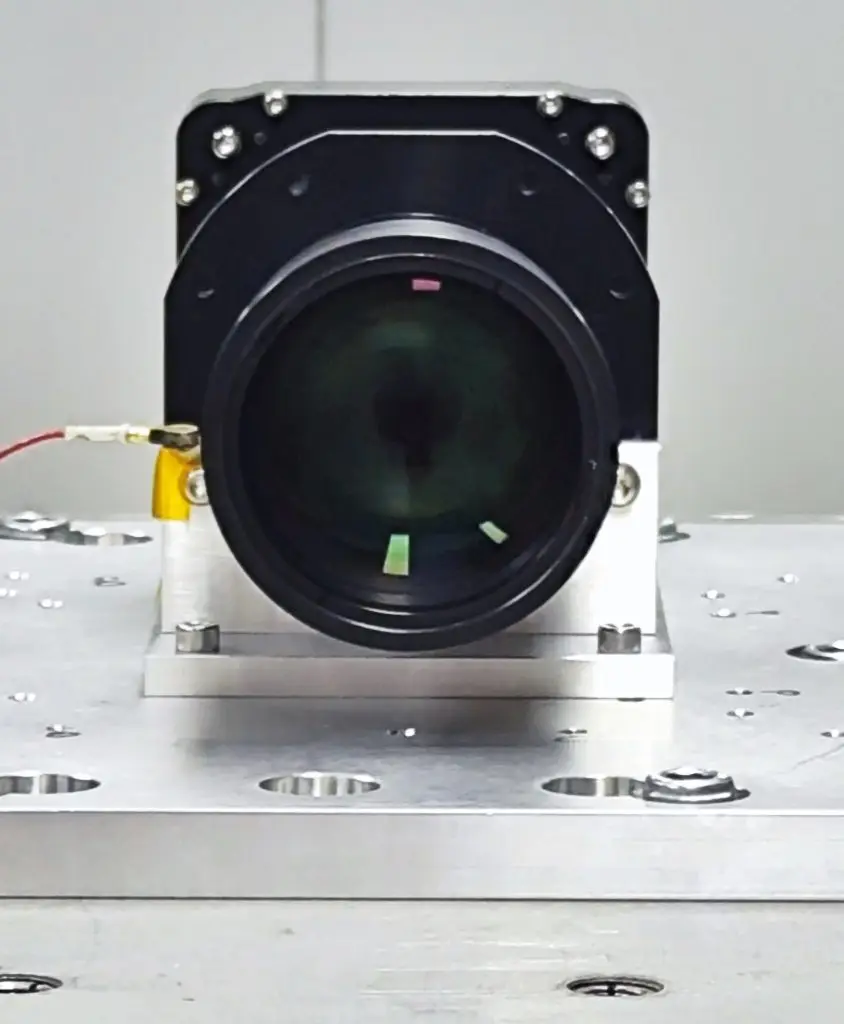
The camera is more than an imaging sensor. Combined with NVIDIA Jetson Xavier NX, it can form the vision front-end of an autonomous spacecraft, providing both high-quality imagery and the data stream required for onboard artificial intelligence. Its combination of flight-proven hardware, 2448 × 2048 RAW imaging, 10 FPS full-resolution operation, up to 15 FPS ROI operation, MIPI CSI-2 connectivity and Jetson-compatible AI processing makes it suitable for the next generation of intelligent CubeSat and small-satellite missions. As spacecraft become increasingly autonomous, the ability to capture, understand and act on visual information directly onboard will become an important capability. This camera provides a practical hardware foundation for bringing that capability into space.