The Barbecue Roll: Thermal Management for Deep-Space Travel
- June 12, 2026
- CAVU Aerospace UK
Deep-space spacecraft are exposed to intense solar radiation on the side facing the Sun while the opposite side remains extremely cold. Without proper thermal management, large temperature differences can develop across the vehicle, potentially damaging equipment, affecting structural integrity, and reducing mission reliability. To address this challenge, engineers use a technique known as the barbecue roll.
In thermal management procedures we should have distinction between passive thermal control actions like barbecue roll, insulation, coatings and active thermal control methods like TCU, heaters, pumps, radiators. At the end depending on mission orbit, duration & design constraints, a thermal engineer deploy a combination of passive & active thermal management procedures to deliver the job.
A barbecue roll is a slow, continuous rotation of a spacecraft about its longitudinal axis during transit through space. The manoeuvre gets its name from the way food rotates on a barbecue spit, ensuring that all sides receive roughly equal heating.
Instead of allowing one side of the spacecraft to face the Sun continuously, the vehicle slowly rotates, exposing all surfaces to sunlight and shadow over time. This equalizes temperatures across the spacecraft and prevents localized overheating or excessive cooling.
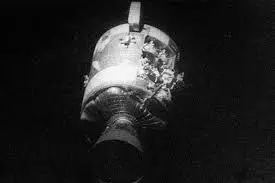
The barbecue roll became widely known during the Apollo Moon missions. During the journey between Earth and the Moon for few days, the Apollo spacecraft performed a slow roll to maintain a balanced thermal environment. Mission controllers carefully selected the rotation rate to ensure uniform heating while minimizing fuel consumption.
The technique has since influenced thermal-control strategies for numerous deep-space missions.
Spacecraft travel through a vacuum where heat transfer occurs primarily through radiation. Without atmospheric convection, temperatures can vary dramatically:
- Sun-facing surfaces may become extremely hot.
- Shadowed surfaces may become extremely cold.
- Thermal expansion and contraction can stress structures.
- Electronics and batteries may operate outside their allowable limits.
A barbecue roll helps maintain temperatures within acceptable ranges by distributing solar heating more evenly.
The spacecraft is oriented so that its axis points approximately toward the desired flight direction or mission geometry. Small attitude-control thrusters or reaction wheels then induce a slow rotation.
Typical characteristics include:
- Slow rotational rates, often a few revolutions per hour.
- Continuous operation during long cruise phases.
- Minimal energy requirements once established.
- Compatibility with thermal blankets and passive insulation systems.
As the spacecraft rotates, every surface alternate between sunlight and shadow, reducing temperature gradients.
Benefits are uniform heating, improved equipment reliability, reduced structural stress & lower thermal-control requirements.
Challenges on the other hand are:
- Communication antennas must maintain acceptable pointing.
- Solar arrays must continue generating sufficient power.
- Scientific instruments may require stable orientations.
- Navigation systems must account for the rotation.
While the barbecue roll helps distribute solar heating evenly across a spacecraft, it is only one element of a complete thermal management system. The primary responsibility for maintaining equipment within safe operating temperatures belongs to the spacecraft’s Thermal Control Unit.
The Thermal Control Unit is an integrated system consisting of temperature sensors, heaters, radiators, thermal coatings, insulation blankets, heat pipes, fluid loops, and control electronics. Its function is to continuously monitor temperatures throughout the spacecraft and regulate heat flow between components and the surrounding space environment.
During a barbecue roll manoeuvre, the Thermal Control Unit performs several important functions:
Sensors located throughout the spacecraft continuously measure temperatures of critical subsystems such as avionics, batteries, propulsion components, communication equipment, and scientific instruments. The TCU uses this information from up to 180 sensors in payloads or other sub-systems to assess thermal conditions and adjust thermal-control devices as required.
Even though the spacecraft is rotating, certain internal components may generate significant amounts of heat. Heat pipes and conductive thermal pathways transfer this heat away from sensitive electronics and distribute it more evenly throughout the spacecraft structure.
As different spacecraft surfaces rotate in and out of sunlight, some components may temporarily cool below their operational limits. The Thermal Control Unit activates electrical heaters to maintain minimum temperatures and prevent damage caused by excessive cold.
Radiators provide a controlled pathway for excess heat to be rejected into space. The TCU regulates thermal connections between heat-generating equipment and radiator surfaces to maintain thermal balance throughout the mission.
The barbecue roll reduces large temperature differences between the sunlit and shaded sides of the spacecraft, thereby lowering the workload of the Thermal Control Unit. Instead of compensating for extreme thermal gradients, the TCU can focus on fine temperature regulation of individual systems. This improves efficiency, reduces heater power consumption, and enhances overall spacecraft reliability.
For missions lasting months or years, thermal stability is critical. The combination of barbecue roll manoeuvring and Thermal Control Unit operation provides a robust thermal-control strategy that protects spacecraft systems from both overheating and excessive cooling. Together, these systems ensure that spacecraft remain operational throughout long-duration journeys in the harsh environment of deep space.
In essence, the barbecue roll provides passive temperature equalization, while the Thermal Control Unit provides active thermal regulation. The two systems work together to maintain a stable and survivable environment for spacecraft equipment during deep-space travel.
Modern spacecraft often combine barbecue roll techniques with advanced thermal coatings, radiators, and active thermal-control systems. A central Thermal Control Unit with more than 180 real time measurements from different temperature sensors can engage both passive & active thermal control equipment to maintain payload or other sub-systems in the desired temperature range. TCU-Max is delivered to number of projects in deep space missions & for more reliability usually one TCU-Max is maintaining payloads & other keep other sub-systems.