
TCU for Active Thermal Control in Space Applications
Credit: NASA, SpaceX
- May 25, 2026
- CAVU Aerospace UK
Temperature in atmosphere re-entry from orbit can go to 1700 degree while from outer space like coming back from the Moon can go up to 1700 degree. In cases like Starship which are looking for complete reusability for spacecrafts, it’s extremely challenging to keep heat shields cool specially for critical hotspots like flaps, hinges etc. where heat shields alone can’t be a solution.

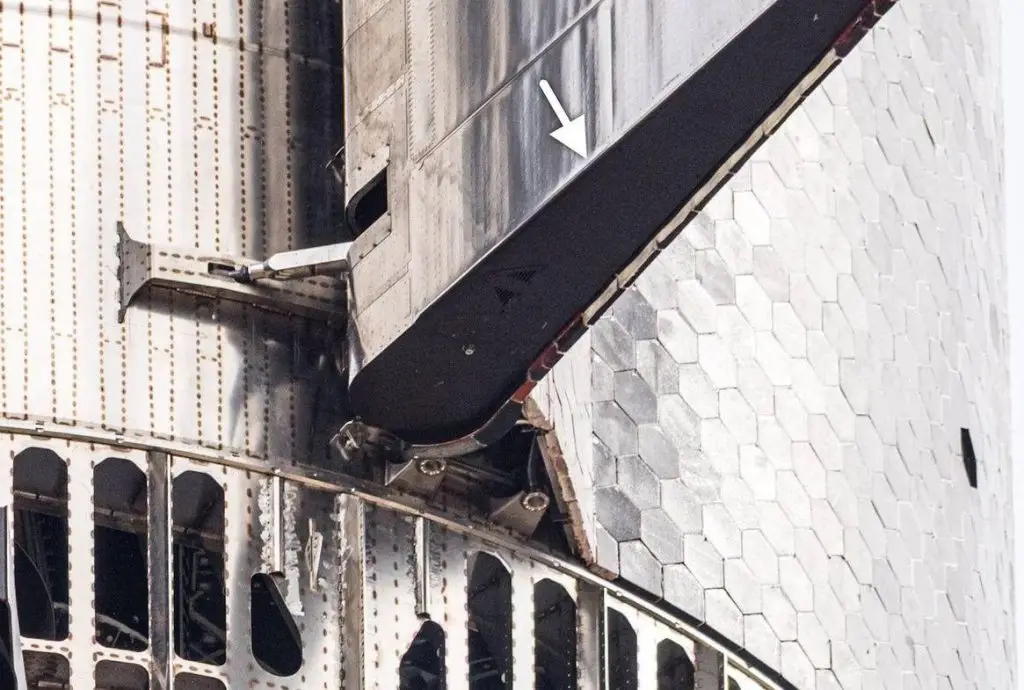
Starship V3 shown great improvement in heat shields compared to V2. There is growing evidence that future Starship variants — including what many refer to as “Starship V3” or “Block 3” — are testing or preparing to use localized active cooling in extreme hotspot regions, but SpaceX has not publicly confirmed a full operational active cooling system across the vehicle. What SpaceX Appears to Be Testing Localized Active Cooling According to recent reporting on Starship V3 development:

Improvement of heat management in Starship V3 re-entry compared to V2
“SpaceX has integrated active transpiration cooling in the highest-heat areas, particularly around the leading edges of the forward flaps.”
The proposed system uses methane propellant pumped through microporous structures to create a cooling gas layer over hotspot regions.
Cooling system was repeatedly mentioned in SpaceX reports as one of the most challenging problems in full reusability.
Historical Use of Active Cooling in Space Systems
Space Shuttle Main Engines- The Space Shuttle used regenerative cooling extensively in its main engines. Liquid hydrogen circulated through thousands of cooling channels before combustion, protecting engine walls from temperatures above 3,000°C.
Apollo Command Module
The Apollo Command and Service Module- It primarily used ablative re-entry shielding, but its onboard systems relied on active thermal control loops using water-glycol coolant circuits. These systems regulated: avionics temperatures, crew cabin conditions & fuel cell cooling.
International Space Station- The International Space Station contains one of the most advanced active thermal management systems ever built. Its External Active Thermal Control System (EATCS) circulates ammonia coolant, transports heat through radiator panels & stabilizes station temperatures. The ISS thermal system continuously manages electronics, life support, solar power systems & science laboratory equipment.
Thermal Control Unit (TCU) Role in spacecrafts
A Spacecraft could use one centralized or few TCU to manage hotspot cooling dynamically. CAVU aerospace has develop several versions of TCU with different sizes in temperature sensor reading & heater driving channels. For some specific missions we have designed TCUS with 300 heater channels but because of long cabling, it makes more sense to have maximum 180 temp measurement & 128 heater channels with 3,000W power to have less cable lengths, better efficiency & more reliability. In previous missions we had first TCU specifically for payload thermal control & second for platform.
TCU has advanced networking capabilities like gRPC in activated Eth & receiving data from camera. As in some applications TCU is doing thermal management for a specific payload & since it was installed near payload, TCU was best option to provide visibility on payload when doing manoeuvre or deployment. So, TCU is not only about thermal management but also data handling of payload.
We had also delivered some function of TCU to control active thermal management & send cooling commands to actuators.
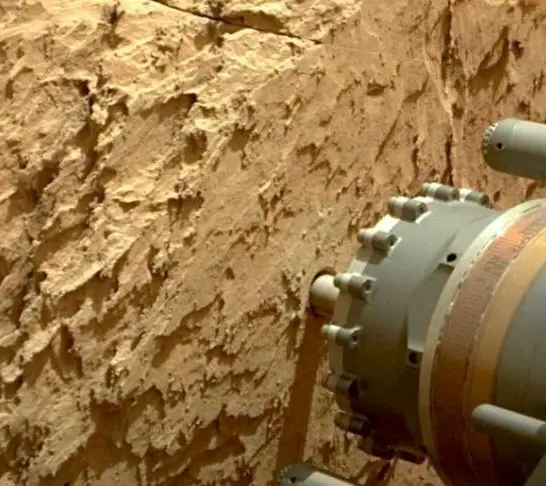
Heaters on head of Mars Rover
Possible TCU Functions
Sensors embedded behind tiles could track local heating, tile integrity, plasma penetration & structural temperatures.
TCU typically interfaces with:
Component | TCU Function |
Valves | Open/close coolant flow |
Pumps | Adjust coolant circulation rate |
Actuators | Position cooling flaps or vents |
Sensors | Read temperature/pressure |
Heat exchangers | Regulate thermal transfer |
Cryogenic systems | Control boiloff and flow |
Radiators | Deploy or modulate rejection |
A simplified active thermal control loop could operate like this:
- Sensors detect hotspot temperatures.
- TCU processes thermal data.
- TCU drives heaters or commands proportional Solenoid valves.
- Valves increase methane coolant flow.
- Coolant absorbs heat from hotspot.
- Heat is redistributed or rejected.
Heaters can be driven with specific power. For active thermal control also, these allow variable flow control rather than simple ON/OFF operation.
A TCU can command 5% open, 40% open or 90% open depending on thermal demand.