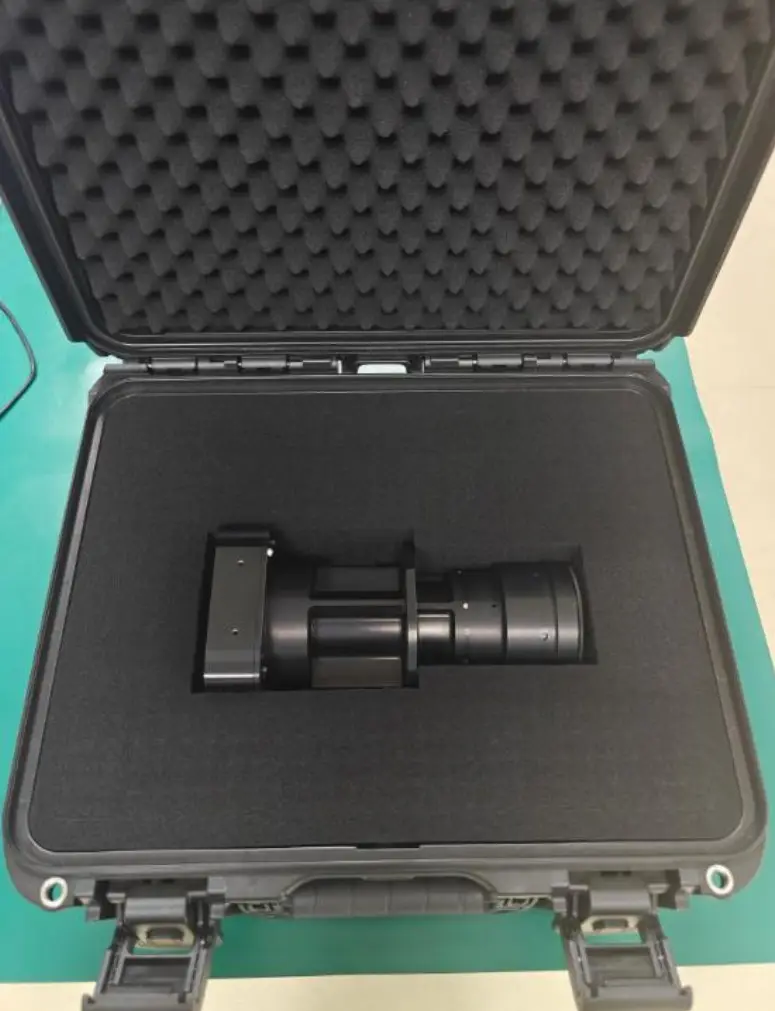
CubeSat Camera, Optic Performance Index
- July 10, 2026
- CAVU Aerospace UK
The technical index requirements for optic assembly of a cubesat camera is usually about ranges listed here.
|
No. |
Spec. |
Requirements |
|
1 |
Spectral range |
450–700 nm± 3% |
|
2 |
Focal length |
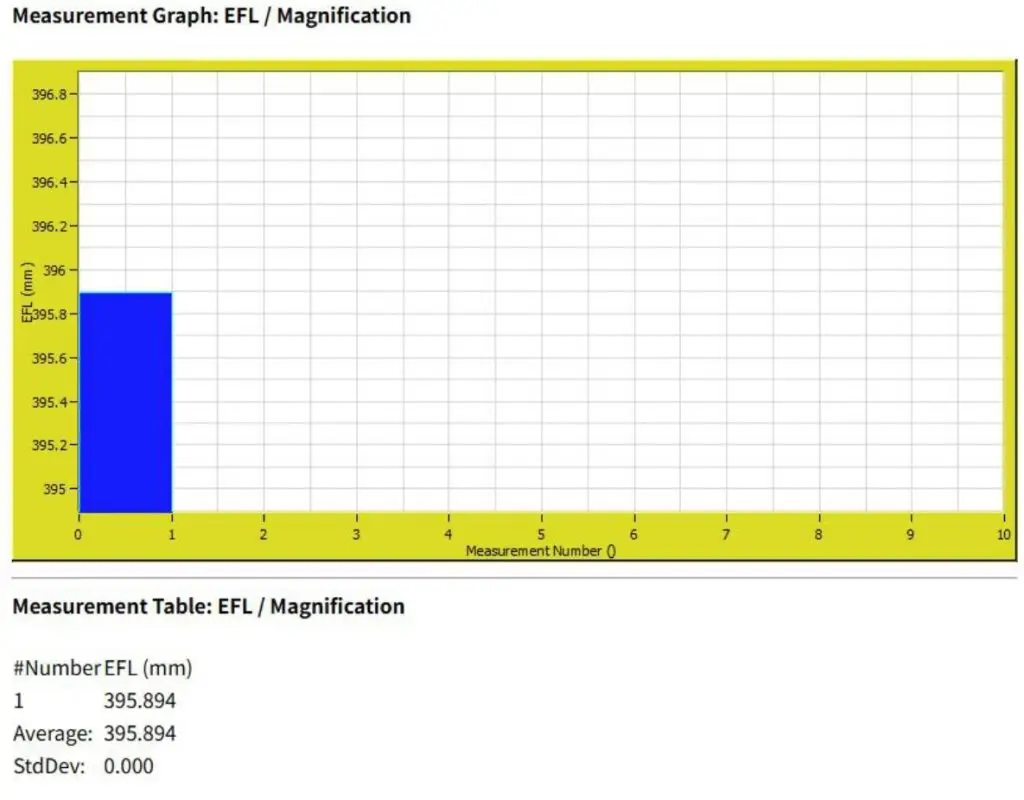
400 mm±2% |
|
3 |
Full FOV (diagonal) |
≥ 1.56° |
|
4 |
MTF@75lp/mm(On-axis) |
≥ 0.30 |
|
5 |
MTF@75lp/mm(70%FOV) |
≥0.20 |
|
6 |
MTF@75lp/mm(100%FOV) |
≥ 0.13 |
|
7 |
Assembly dimensions (L×W×H) |
≤ 200 mm×98mm×98mm |
|
8 |
Total Weight |
< 1800 g |
Optical Performance Verification Procedure for High-Resolution Satellite Cameras
The optical payload is one of the most critical subsystems of an Earth observation satellite. While detector technology determines the achievable image resolution, the optical assembly ultimately defines image quality through its ability to transfer fine spatial details from the observed scene to the image sensor.
Before a flight camera is integrated into a spacecraft, its optical performance must be thoroughly verified against the design specifications. A comprehensive optical qualification program ensures that the manufactured lens assembly achieves the expected focal length, field of view, spectral transmission, modulation transfer function (MTF), mechanical dimensions, and overall mass.
The verification campaign begins by defining measurable acceptance criteria for every critical optical parameter. Typical qualification requirements include:
- Spectral operating range
- Effective focal length
- Field of View (FOV)
- Modulation Transfer Function (MTF)
- Mechanical dimensions & Mass
Spectral Transmission Verification
The objective of the spectral transmission test is to verify that the optical system efficiently transmits the intended wavelength range while suppressing unwanted wavelengths.
For Earth observation cameras operating in the visible spectrum, transmission characteristics directly influence image brightness, colour accuracy and signal-to-noise ratio.
Unlike focal length or MTF, spectral response is largely determined during optical design through:
- Selection of optical glass
- Anti-reflection coatings
- Optical cement
- Filter coatings
- Lens surface treatments
The verification process includes:
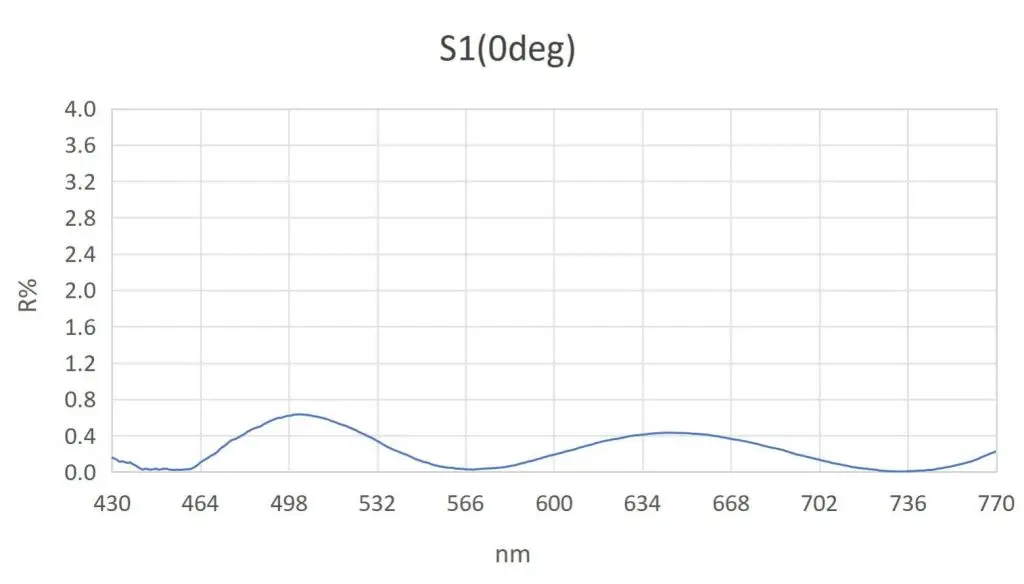
- Measuring coating transmission curves for every optical element
- Comparing measured transmission against design predictions
- Verifying the combined transmission across the complete optical path
The resulting transmission curve confirms that all optical elements contribute to the required operational spectral range while maintaining high throughput across the imaging band.
The required spectral range for each lens is usually 0.45~0.7 μm, which is mainly achieved through material selection and coating design. A cubesat camera normally has 5-9 lens depending on mission requirements.
Effective Focal Length Measurement
The effective focal length determines the camera magnification, ground sampling distance (GSD), swath width and pointing geometry. Even a small focal length deviation can affect mapping accuracy and mission planning.
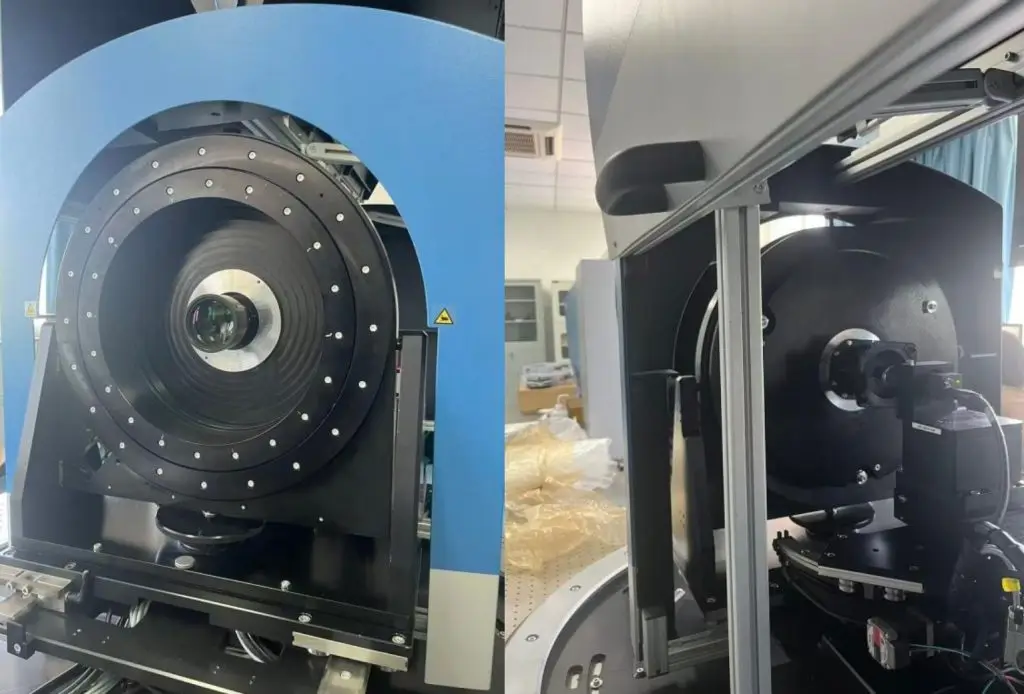
High-precision optical metrology systems such as the TRIOPTICS ImageMaster are commonly used. These instruments employ collimated targets positioned at optical infinity to accurately determine the effective focal length.
The optical assembly is mounted on a precision alignment fixture. The ImageMaster system projects calibrated targets through the lens while measuring:
- Image position
- Principal plane location
- Optical magnification
- Effective focal length
The measured value is then compared with the optical design specification.
Field of View Verification
Field of View determines the ground coverage obtained from orbit. A correctly manufactured lens must achieve the specified diagonal FOV without introducing excessive aberrations near the image edges.
Field of View is evaluated using the same optical bench employed for focal length measurements. The ImageMaster system measures the image height corresponding to the edge of the detector. Using the measured image geometry and focal length, the half-angle and full diagonal Field of View are calculated. Verification confirms that the optical system provides the expected scene coverage required for mission operations.
Modulation Transfer Function (MTF) Measurement
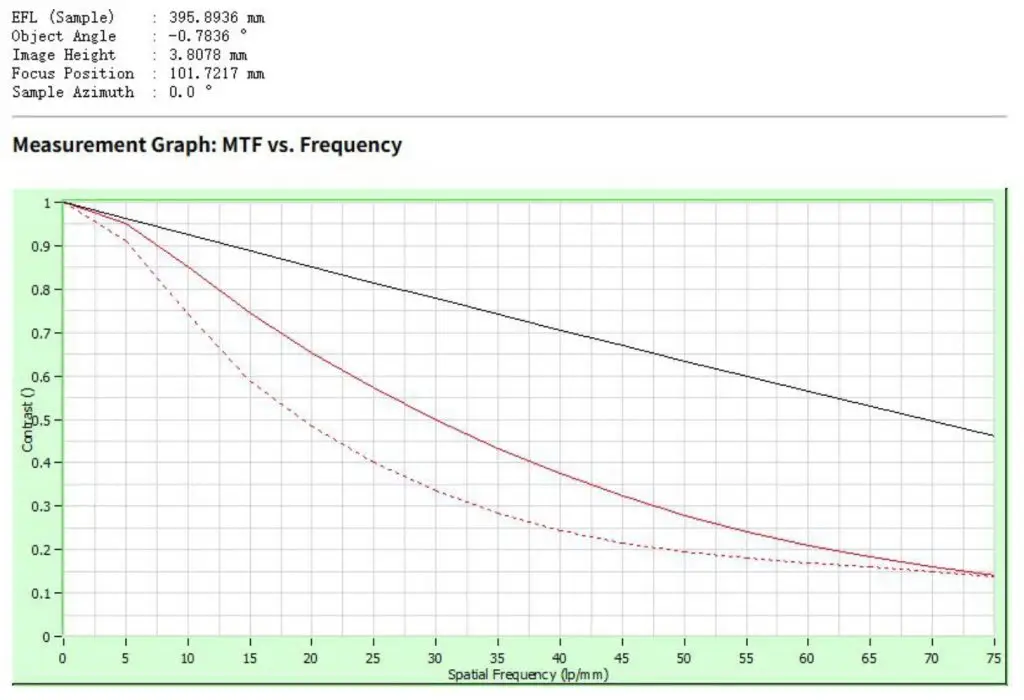
The Modulation Transfer Function is widely regarded as the most important optical performance indicator. MTF quantifies the ability of the optical system to reproduce fine image detail and directly correlates with achievable image sharpness. Rather than simply measuring resolution, MTF evaluates how image contrast is preserved at increasing spatial frequencies.
The lens is aligned on the optical bench and measurements are performed at several field positions:
- On-axis (centre of the image)
- Intermediate field (typically 70% of the field radius)
- Full field (edge of the detector)
For each location, the system determines the contrast transfer at a specified spatial frequency (for example, 75 line pairs/mm).
Evaluating multiple field positions verifies that image quality remains consistent across the entire sensor rather than only at the optical centre.
This procedure also reveals manufacturing errors such as:
- Decentration
- Lens tilt
- Assembly misalignment
- Residual aberrations
- Edge performance degradation
Maintaining acceptable MTF at the edge of the image is particularly important for remote sensing applications where every pixel contributes to the final Earth image.
Mechanical Dimension & Mass Verification
Mechanical inspection confirms compatibility with the spacecraft structure and payload interfaces. Even perfectly performing optics cannot be integrated if mechanical tolerances are exceeded.
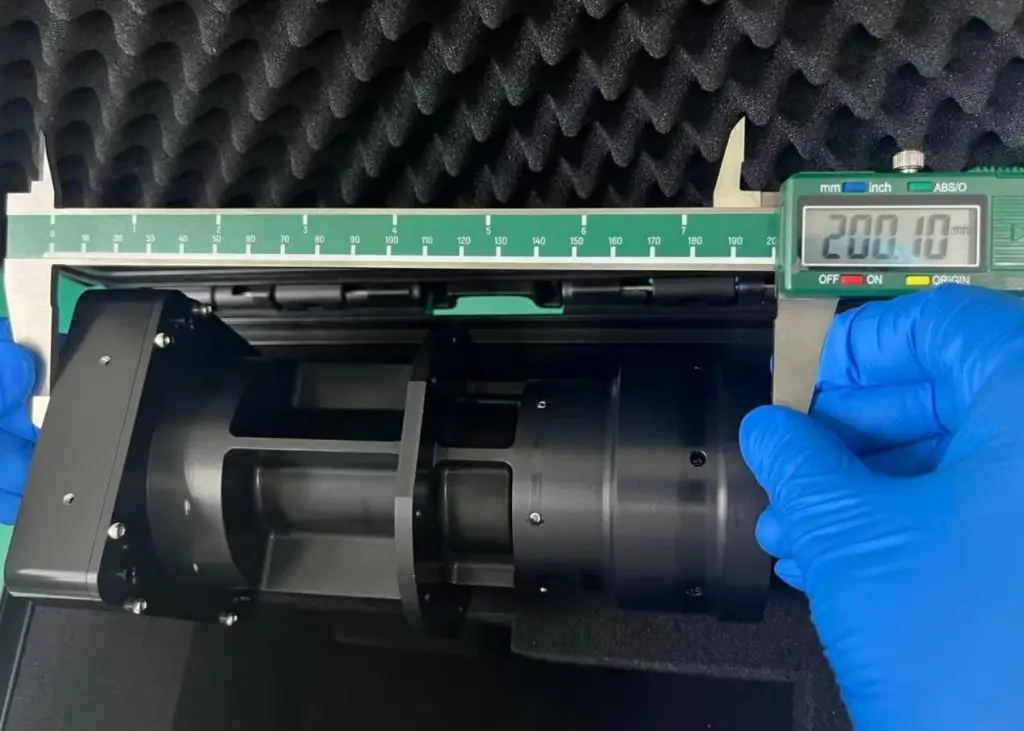
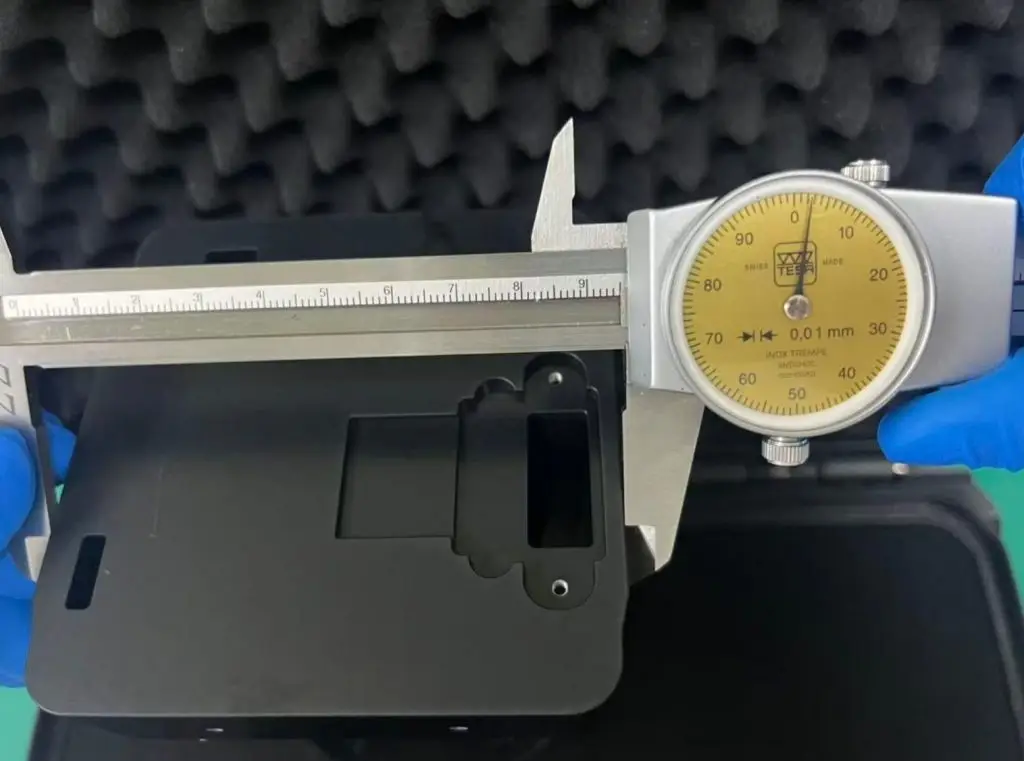
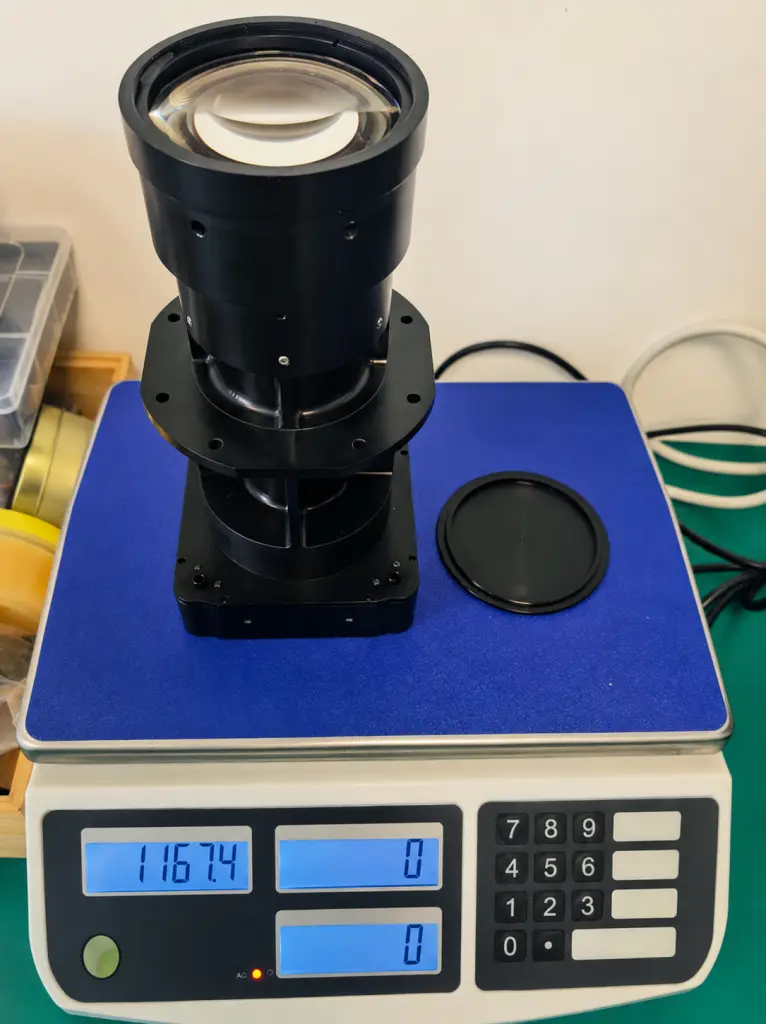
Precision calipers and coordinate measuring equipment are used to verify overall length, width, height, mounting interfaces & mechanical envelope. It also should have overall weight within the requested range.
Compliance Assessment
After completion of all measurements, the recorded values are compared against the predefined qualification limits. Each parameter is classified as either Pass or Fail. Only when every optical parameter satisfies its acceptance criteria is the camera considered compliant for subsequent environmental testing, including vibration, thermal vacuum (TVAC), shock and final flight acceptance.