Perseverance Uncovers 3.9 Billion Years Geological Records on Mars
Credit: NASA
- July 18, 2026
- CAVU Aerospace UK
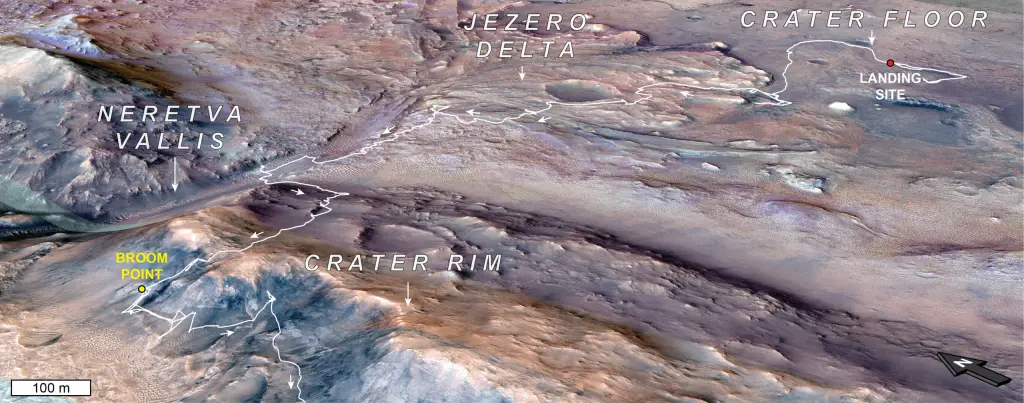
NASA’s Perseverance rover has once again expanded our understanding of the Red Planet by discovering one of the oldest preserved geological sequences ever examined on Mars. While exploring the rim of Jezero Crater, the rover identified a thick succession of rocks that records repeated asteroid impacts during the earliest stages of Martian history, offering scientists an unprecedented window into the planet’s violent formation billions of years ago.
Looking Back More Than 3.9 Billion Years
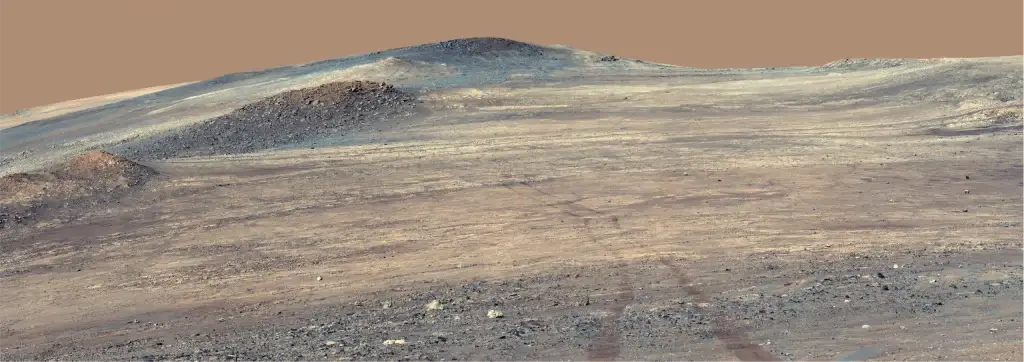
The newly investigated rock formation, known by the Perseverance science team as the Broom Point member, consists of approximately 75 meters (245 feet) of layered bedrock. Geological analysis suggests these rocks are more than 3.9 billion years old, making them among the oldest materials ever studied directly by a rover on another planet.
Rather than representing a single impact event, the layered structure indicates that Mars experienced numerous large asteroid collisions over an extended period. Each impact deposited fresh material across the landscape, gradually building a geological archive that has remained remarkably well preserved for billions of years.
A Timeline of Early Mars
For planetary scientists, ancient rocks are much more than solid stone—they are historical records.
Each individual layer preserves information about the environment at the time it formed, allowing researchers to reconstruct the sequence of events that shaped early Mars. The repeated impact deposits discovered by Perseverance suggest that Jezero Crater’s surrounding terrain was repeatedly modified during the Late Heavy Bombardment, a period when planets throughout the Solar System were struck by countless asteroids.
Understanding this history helps scientists answer fundamental questions including:
- How quickly did Mars evolve after its formation?
- How often did large asteroid impacts reshape its surface?
- What role did impacts play in creating environments capable of supporting liquid water?
- Could these impacts have influenced the conditions necessary for ancient microbial life?
Why Impact History Matters
Asteroid impacts are often viewed simply as destructive events. However, they also played an important role in planetary evolution.
Large impacts generate enormous amounts of heat, fracture underground rocks, create hydrothermal systems, and expose materials that would otherwise remain buried beneath the surface. On Earth, similar impact-generated environments are considered potential habitats for microbial life.
By studying Mars’ ancient impact record, scientists can better understand whether similar environments may once have existed there, particularly during the period when Jezero Crater contained a lake and river delta.
Jezero Crater Continues to Deliver Scientific Surprises
Perseverance landed inside Jezero Crater in February 2021 because orbital observations suggested it once hosted a long-lived lake fed by an ancient river system.
Since then, the rover has produced an extraordinary series of discoveries, including volcanic rocks altered by water, sedimentary deposits from an ancient delta, organic molecules preserved within rocks, and geological evidence of long-lasting water activity. The latest findings now add another important chapter by revealing how repeated asteroid impacts helped shape this region long before the crater became a lake.
Preparing Samples for Future Study
Perseverance is not only investigating these ancient rocks with onboard instruments but is also collecting carefully selected samples for eventual return to Earth through a future Mars Sample Return campaign.
Laboratory analysis using Earth’s advanced scientific instruments could provide dating accuracy, mineralogical detail, and chemical measurements impossible to achieve remotely, potentially answering long-standing questions about the geological evolution of Mars and the possibility of ancient life.
Engineering Excellence Enabling Scientific Discovery
Behind every scientific breakthrough lies an extraordinary engineering achievement.
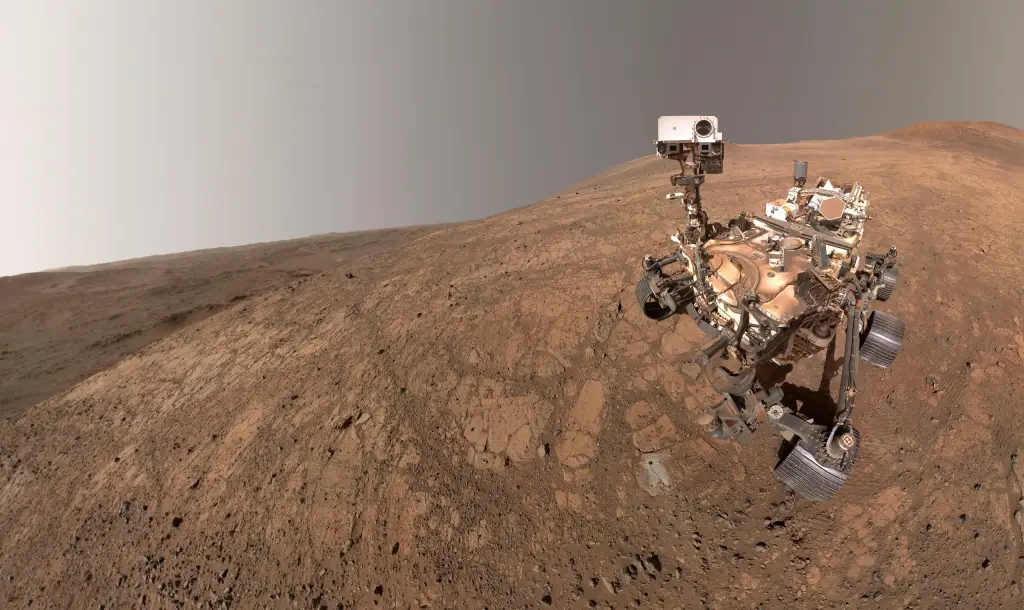
Operating continuously in one of the harshest environments in the Solar System, Perseverance must survive extreme temperature variations, dust storms, radiation exposure, and rugged terrain while carrying sophisticated scientific instruments. The rover demonstrates the importance of highly reliable onboard computing, autonomous navigation, fault management, and robust electronics capable of functioning years beyond their original design life.
For the space industry, missions such as Perseverance illustrate why dependable onboard computers, radiation-tolerant electronics, advanced fault detection and recovery (FDIR), and resilient spacecraft architectures are essential for enabling ambitious planetary exploration missions. Long-duration autonomous operation remains one of the defining engineering challenges of deep-space exploration.
Every kilometer traveled by Perseverance adds another page to Mars’ geological history. The newly discovered impact record provides valuable evidence of the intense bombardment that shaped the young planet more than 3.9 billion years ago while strengthening our understanding of how Mars evolved from a hostile world into one that once possessed rivers, lakes, and potentially habitable environments.
As Perseverance continues its journey beyond Jezero Crater, scientists expect many more discoveries that will deepen our knowledge of the Red Planet and help prepare humanity for future robotic and human exploration.