
Peripheral boards on OnBoard Computers for ADCs & DACs
- March 13, 2026
- CAVU Aerospace UK
Usually from mission’s description on sensor readout and control systems, project developers are looking for an instrumentation-type ADC/DAC system rather than an RF/SDR digitizer. The design priorities for these two classes are quite different, so it would help to clarify a few parameters before proposing the right Peripheral boards:
Typical differences between the two approaches:
Parameter | Instrumentation ADC/DAC (control & sensors) | SDR / RF ADC/DAC |
Resolution | Usually 16–24 bit (precision) | Typically, 12–16 bit |
Sampling rate | kSPS to a few MSPS | 10 MSPS to GSPS |
Channel count | Often many channels (e.g., 8–32) | Usually 1–4 channels |
Sampling type | Often simultaneous or multiplexed precision | High-speed streaming |
Input range | Defined voltage ranges (e.g. ±10 V, 0–5 V, ±2.5 V) | Small RF/full-scale differential (~1 Vpp) |
Signal type | Single-ended or differential, conditioned sensors | High-speed differential RF inputs |
Noise / accuracy | Focus on low noise, INL/DNL, precision | Focus on SFDR, bandwidth |
Output type (DAC) | Precision voltage/current outputs | High-speed RF waveform outputs |
For a fast steering mirror control loop, systems typically prioritize:
- Multiple simultaneous ADC channels for sensor readout
- Multiple DAC outputs for actuator control
- Deterministic timing / low latency
- Defined voltage ranges (e.g., ±10 V or 0–5 V)
To recommend the right architecture, we usually need to know followings:
- Required sampling rate per channel (e.g., 10 kSPS, 100 kSPS, 1 MSPS, etc.)
- Resolution requirement (12-bit, 16-bit, 18-bit, etc.)
- Input signal range for ADCs (±10 V, ±5 V, 0–3.3 V, differential, etc.)
- DAC output range required for driving the mirrors
- Do the 8 ADC channels need simultaneous sampling, or is multiplexing acceptable?
- Any latency requirements for the control loop?
- Preferred interface location (direct FPGA processing or CPU/Linux side)?
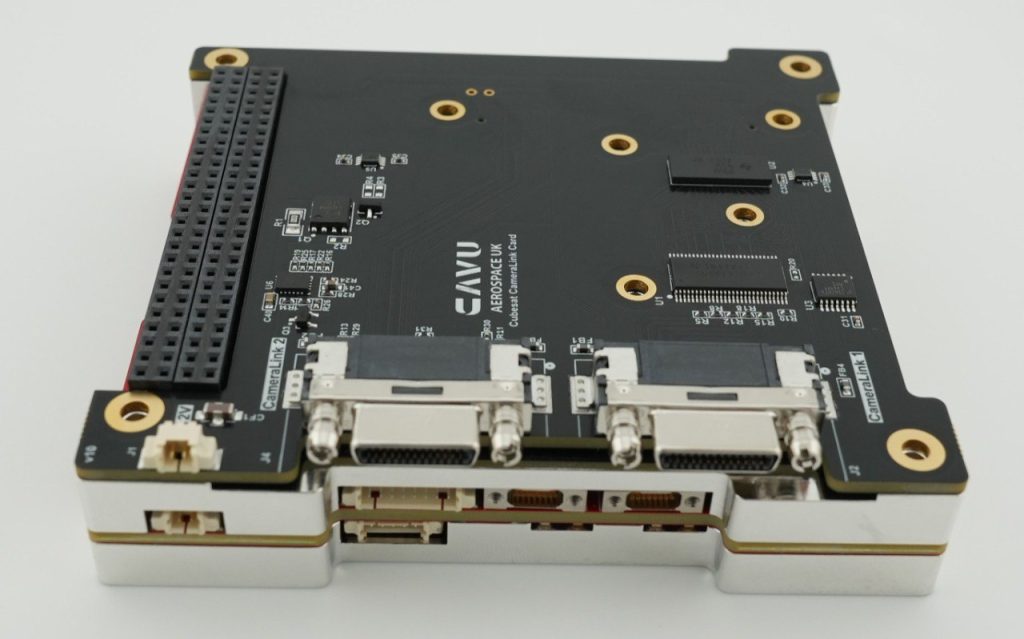
System architecture can be fit into an Addon card on top of the OBC or integrated into an AL7075 enclosure box for more reliable options.