
Moon Rovers & Lunar-Base Missions, Elements of Multiplanetary Life for Human
- April 29, 2026
- CAVU Aerospace UK
The most widely accepted explanation for the Moon’s formation is the Giant Impact Hypothesis. Around 4.5 billion years ago, a Mars-sized body (almost half size of the Earth)— Theia—collided with the early Earth. The immense energy from this impact ejected debris into orbit, which gradually coalesced to form what we now know as the Moon.
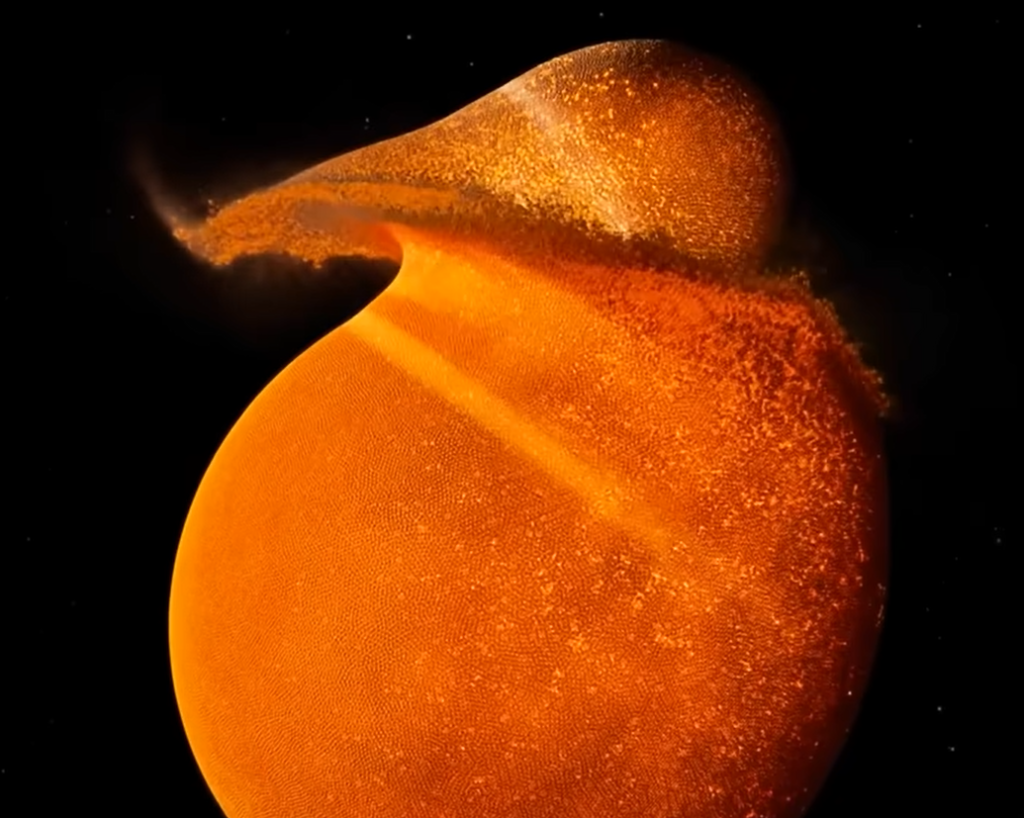
Without the Moon, Earth’s environment might have been far less stable—possibly too chaotic for complex life to evolve.
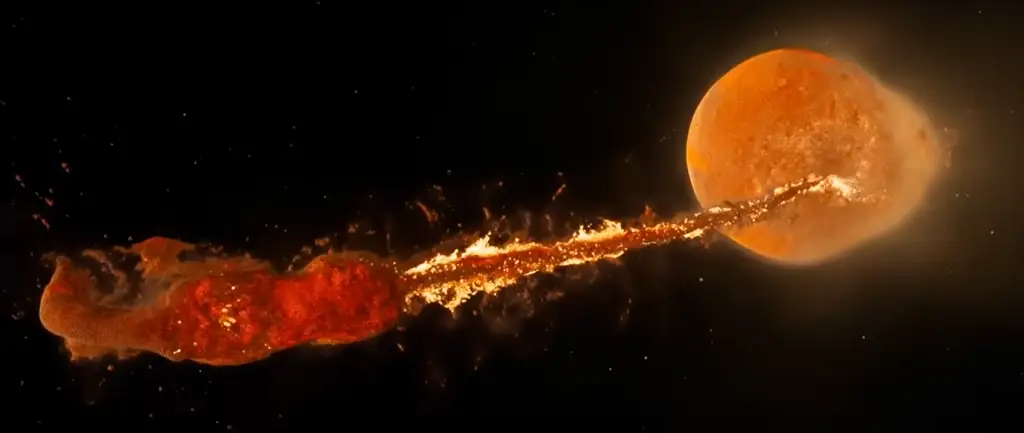
https://www.youtube.com/watch?v=kRlhlCWplqk
Credit: NASA Simulation
Lunar Missions
The Moon is no longer just an object of curiosity—it is a strategic making a base for humanity’s future.
The Moon holds valuable resources, including water ice trapped in permanently shadowed craters near its poles. This ice can be converted into:
- Drinking water
- Oxygen for breathing
- Hydrogen and oxygen for rocket fuel
It also preserves a pristine record of the early solar system, offering insights into planetary formation and cosmic history.
Operating on the Moon allows scientists and engineers to test technologies in a harsh but relatively accessible environment like life support systems, radiation shielding, autonomous construction & long-duration human missions
Compared to Mars, the Moon is only about three days away, making it a safer place to refine these systems.
Lifting up from the Moon is much easier than earth.
NASA’s Artemis program aims to establish a sustained human presence on the Moon. One of the key motivations is the Moon’s lower gravity—0.17 g.
The Moon becomes a spaceport & a logistical hub that makes interplanetary travel more feasible and sustainable.
Multiplanetary Life for Human
Space is not just about exploration—it’s about survival & protect our civilizations. We definitely don’t want to go extinct the way dinosaurs went! Human civilization currently exists on a single planet. This creates a fundamental vulnerability. Natural or human-made catastrophes like asteroid, super-volcanic eruptions, climate collapse or nuclear conflicts.
Establishing human presence beyond Earth ensures that civilization is not wiped out by a single catastrophic event.
The Moon is not the final destination—it is the beginning. By building a sustainable presence on the Moon, humanity learns how to live off-world, use extra-terrestrial resources & operate independently from Earth. These capabilities are essential before attempting permanent settlement on Mars, Saturn habitable moons or beyond.
Robotic or humanoid missions about Moon, Mars, Saturn are ground-breaking in terms of expanding our consciousness on space & improving survival chance for human as dominating spices. Moon-Rover missions in ESA/ NASA or other space programs are nothing but early steps to make big picture- Multiplanetary life for human. CAVU Aerospace is proud to contribute in command & Data Handling sub-systems in some space explorations missions and we keep supporting however wants to have a part in making science fictions, no longer fictions!