Mars Global Localization and AI-Powered Autonomous Exploration
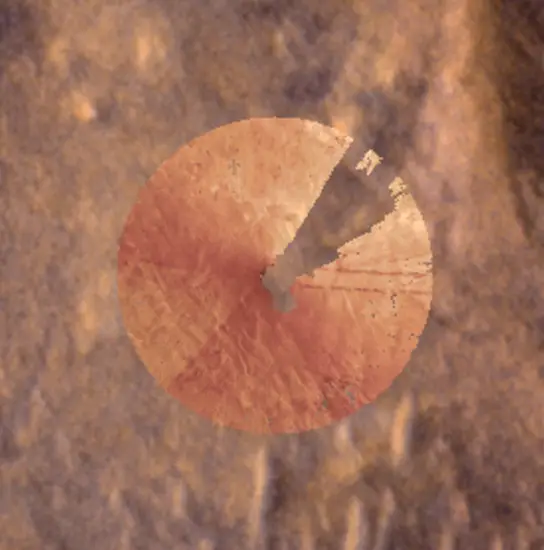
Credit: NASA- JPL
- June 23, 2026
- CAVU Aerospace UK
As humanity pushes deeper into the Solar System, robotic explorers must increasingly operate without continuous human guidance. Communication delays between Earth and distant planets make real-time control impossible. On Mars, signals can take between 4 and 24 minutes to travel one way, forcing rovers to make many decisions independently.
NASA’s Perseverance rover represents a major leap toward autonomous planetary exploration through advanced navigation technologies such as Mars Global Localization and onboard artificial intelligence. These capabilities allow the rover to understand its position, plan safe routes, avoid hazards, and conduct scientific investigations with minimal intervention from Earth.
The next evolution of this technology will combine sophisticated AI models, accelerated edge computing platforms such as NVIDIA Jetson modules, and radiation-tolerant FPGA devices like Microchip’s PolarFire FPGA family. Together, these technologies will enable future Moon rovers, Mars rovers, orbital spacecraft, and autonomous satellites to operate with unprecedented intelligence and independence.
Mars Global Localization: Giving Rovers a Sense of Position
One of the greatest challenges for planetary exploration is localization—the ability of a robot to determine its precise location within an unfamiliar environment.
Unlike Earth, Mars & Moon has no GPS satellite constellation. A rover cannot simply query satellites to determine its coordinates. Instead, it must rely on onboard sensors and sophisticated localization algorithms.
Mars Global Localization combines:
- High-resolution orbital imagery from Mars satellites
- Terrain-relative navigation
- Visual odometry
- Feature matching
- Simultaneous Localization and Mapping
By comparing images captured by onboard cameras with orbital maps generated by spacecraft such as NASA’s Mars Reconnaissance Orbiter, the rover can estimate its position within a global coordinate framework.
Perseverance continuously identifies terrain features including:
- Craters
- Rock formations
- Ridge lines
- Surface textures
- Elevation profiles
These landmarks are matched against known orbital imagery, allowing the rover to determine its location with remarkable accuracy even after traveling significant distances.
This capability dramatically reduces navigational uncertainty and allows the rover to autonomously traverse complex terrain that would otherwise require extensive human supervision.
Perseverance carries the most advanced autonomous navigation system ever deployed on another planet.
Its AutoNav system allows the rover to:
- Detect obstacles
- Classify terrain
- Plan routes
- Recalculate paths
- Execute drives autonomously
Previous Mars rovers often spent large portions of each Martian day waiting for commands from Earth. Perseverance can instead analyze its surroundings and make many navigation decisions independently.
This enables faster scientific operations, greater daily travel distances, reduced mission risk & more efficient use of communication windows. The rover effectively acts as an intelligent field geologist capable of understanding its environment and selecting safe paths toward scientific targets.
Generative AI in Space Exploration
The next major transformation in planetary robotics will come from generative artificial intelligence. Traditional autonomous systems operate using predefined rules and trained classifiers. Generative AI introduces higher-level reasoning capabilities, allowing spacecraft to interpret information, generate hypotheses, summarize observations, and support autonomous decision-making. Future generative AI systems onboard rovers could:
- Analyze geological formations
- Generate scientific observations
- Prioritize samples
- Recommend exploration targets
- Predict hazards
- Adapt mission plans
- Assist astronauts during lunar and Martian operations
Rather than merely recognizing a rock, an AI system may infer that the formation resembles a sedimentary deposit associated with ancient water activity and recommend further investigation.
This level of contextual reasoning could significantly enhance scientific productivity while reducing dependence on Earth-based teams.
OnBoard Edge AI
Generative AI requires substantial computational power. Sending every image or sensor measurement back to Earth for processing is increasingly impractical because of communication delays, limited bandwidth, power constraints & growing data volumes.
Exploration systems must therefore process data directly at the edge—that is, onboard the spacecraft itself. Edge AI enables real-time decision making, autonomous navigation, object recognition, scientific analysis & mission adaptation. This requirement is driving the adoption of advanced heterogeneous computing architectures that combine CPUs, GPUs, and FPGAs.
NVIDIA Jetson: AI Supercomputing in Space
NVIDIA Jetson platforms have emerged as leading edge-AI computing systems for robotics and autonomous vehicles.
Modern Jetson modules provide:
- GPU-accelerated AI inference
- Parallel image processing
- Deep learning acceleration
- Sensor fusion capabilities
- High-performance computer vision
A dual-Jetson architecture can provide redundancy while delivering substantial computational throughput for:
- Terrain classification
- Localization
- Mapping
- Path planning
- Scientific data analysis
- Generative AI inference
Future space-qualified versions of Jetson-class computing systems could serve as the primary AI engine for autonomous exploration vehicles.
For a lunar rover, dual Jetson modules could simultaneously execute navigation AI, scientific AI, communications management, mission planning & astronaut support functions. This architecture transforms the rover from a remotely operated machine into an intelligent robotic explorer.
While GPUs provide exceptional AI performance, space missions also require deterministic processing, radiation tolerance, reliability, and low power consumption. This is where PolarFire FPGA technology becomes essential. Microchip’s PolarFire FPGA family offers several advantages particularly valuable for space applications:
Radiation Resilience
Spacecraft operate in environments exposed to:
- Cosmic radiation
- Solar particle events
- High-energy particles
PolarFire devices are designed to maintain operation under these challenging conditions while minimizing single-event upsets.
Real-Time Sensor Processing
FPGA architectures excel at:
- Camera interfaces
- LiDAR processing
- Radar processing
- High-speed telemetry
- Sensor fusion
These functions can operate with deterministic timing that is difficult to achieve using GPUs alone.
Power Efficiency
Power availability remains one of the most significant constraints in space systems.
PolarFire devices provide excellent performance-per-watt characteristics, making them highly attractive for:
- Lunar rovers
- Mars rovers
- CubeSats
- Deep-space probes
Hardware Acceleration
Many navigation algorithms can be accelerated directly in FPGA fabric, including:
- Feature extraction
- Image correlation
- Localization pipelines
- Compression engines
- Encryption systems
This frees GPU resources for higher-level AI processing.
The Jetson + PolarFire Architecture
A highly promising architecture for future exploration systems consists of:
NVIDIA Jetson Modules
Responsible for:
- Generative AI
- Deep learning inference
- Computer vision
- Mission planning
- Scientific reasoning
PolarFire FPGA
Responsible for:
- Sensor interfaces
- Real-time image preprocessing
- Navigation acceleration
- Radiation-tolerant control systems
- Deterministic computing tasks
Combined Benefits
The combined architecture offers:
- High AI performance
- Radiation resilience
- Low power consumption
- Real-time responsiveness
- Fault tolerance
- Autonomous operation
This heterogeneous computing model mirrors trends already seen in advanced terrestrial autonomous systems, but adapted for the extreme demands of space exploration.
Applications for Moon Rovers
Future lunar missions will require significantly greater autonomy than current robotic systems.
Lunar rovers operating in permanently shadowed regions near the poles will face:
- Limited communications
- Extreme temperatures
- Difficult terrain
- Reduced visibility
AI-powered Jetson and PolarFire systems could enable:
- Autonomous navigation
- Resource prospecting
- Ice detection
- Habitat support
- Construction assistance
These capabilities are expected to play a major role in future lunar base development under programs such as Artemis.
Applications for Future Mars Missions
Future Mars rovers may travel hundreds of kilometers during their operational lifetimes.
To achieve this, they must:
- Plan routes independently
- Analyze scientific targets autonomously
- Optimize energy usage
- Adapt to environmental changes
Generative AI could function as a virtual science team onboard the rover, continuously evaluating discoveries and recommending actions.
The combination of Mars Global Localization, advanced AI, Jetson acceleration, and PolarFire reliability may ultimately allow rovers to conduct weeks of scientific exploration with minimal Earth interaction.
Applications for Intelligent Satellites
The same technologies are equally transformative for spacecraft in orbit.
Future satellites could autonomously:
- Detect wildfires
- Monitor infrastructure
- Track climate changes
- Analyze agricultural conditions
- Identify anomalies
Instead of transmitting raw data, AI-enabled satellites could transmit actionable intelligence.
This dramatically reduces bandwidth requirements while increasing mission value.
Jetson-class processors would execute AI workloads, while PolarFire FPGAs would handle:
- Payload control
- Sensor acquisition
- Data routing
- Communications processing
The result is a new generation of intelligent orbital platforms.