
Lowering the Barrier to Space Imaging for CubeSat and SmallSat Operators
- February 16, 2026
- CAVU Aerospace UK
Access to high-performance Earth observation imagery should not be limited by long lead times, high NRE costs, or payload development risk. At Cavu Aerospace, we have developed a practical and scalable camera strategy specifically tailored for CubeSats and small satellites — enabling faster development cycles and significantly lower upfront costs.
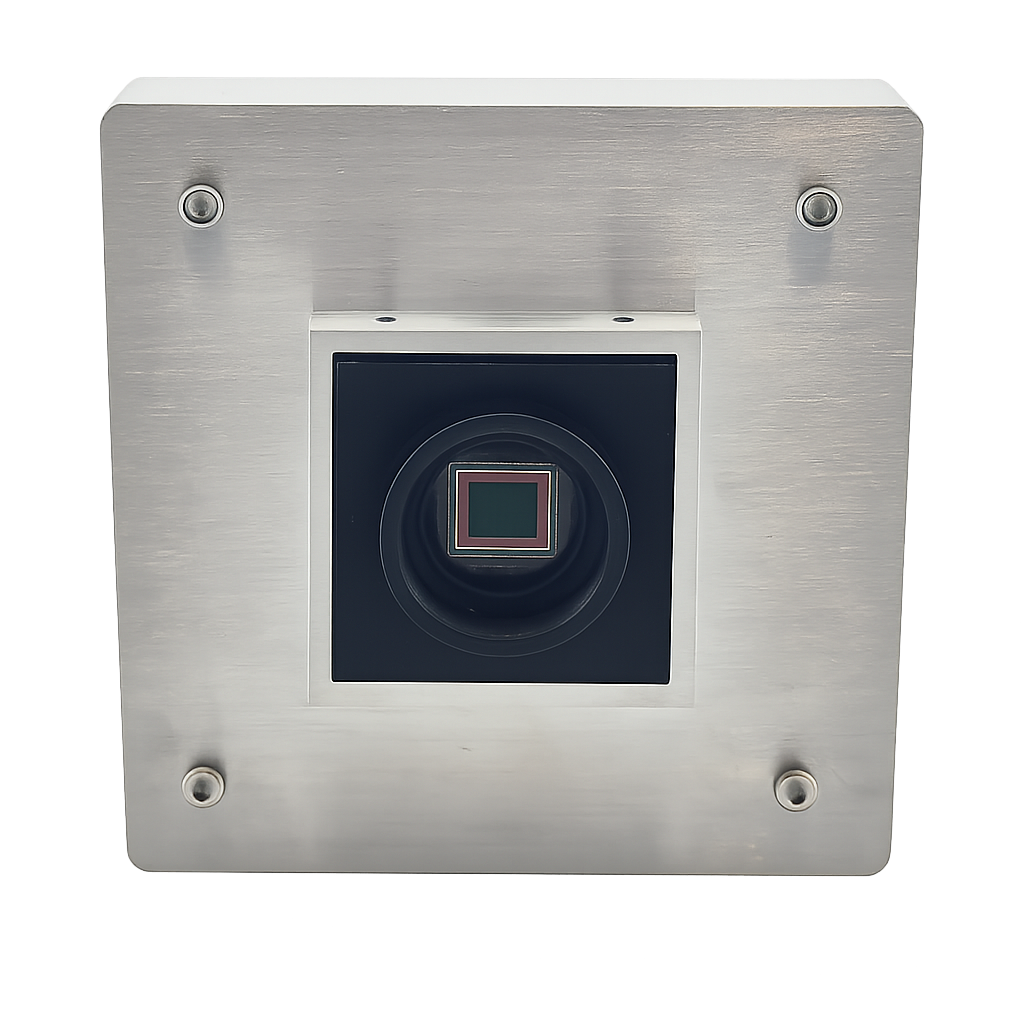
The Challenge in Small Satellite Imaging
Small satellite missions — particularly in the CubeSat class such as CubeSat platforms — operate under strict SWaP (Size, Weight, and Power) constraints. At the same time, customers expect increasingly higher image resolution and reliability.
Traditionally, optical payload development involves:
- Long lead times for bespoke lens assemblies
- High engineering model (EM) costs
- Limited early access to flight-representative electronics
- Delays in ADCS and OBC functional testing
This slows down mission validation and increases program risk.
Our Two-Stage Camera Delivery Model
We have introduced a dual-phase strategy that separates electronic payload validation from final optical optimization, without compromising flight heritage.
1. Engineering Model (EM) — Immediate, Affordable, Functional
For Engineering Models, we provide:
- Flight-representative electronics
- Identical sensor, processing, and interface architecture as Flight Model (FM)
- Commercial off-the-shelf (COTS) optical assemblies
- Immediate shipment capability
- Significantly reduced cost
This enables customers to:
- Perform early ADCS testing
- Validate image pipeline and compression
- Test data handling with their onboard computer
- Conduct environmental and integration tests
- Run functional system validation months earlier
Critically, the electronics architecture remains unchanged between EM and FM, reducing downstream redesign risk.
2. Flight Model (FM) — Bespoke Optical Assembly
For the Flight Model, we introduce:
- Custom-designed, mission-optimized lens assemblies
- GSD optimization based on orbit altitude
- Mechanical and thermal space-qualified integration
- Radiation-considered component selection
This ensures performance alignment with final mission requirements while preserving the validated electronic architecture.
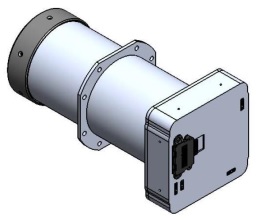
Scalable Camera Platforms: 2U, 3U & 12U
We support multiple form factors aligned with industry standards:
- 2U payload configuration 1.4 kg FM, 18 cm optic assembly, 400mm focal length
- 3U payload configuration, 26 cm optic assembly, 200mm focal length
- 12U high-performance configuration, 26 cm optic assembly, 200mm focal length
These configurations integrate seamlessly into standard CubeSat buses and small satellite platforms.
Sensor Options: From Technology Demo to Commercial EO
We offer three sensor classes:
5 MP
Ideal for:
- Technology demonstrators
- Earth context imaging
- Educational missions
- Constellation experiments
16 MP
The commercial sweet spot for:
- Agricultural monitoring
- Environmental analysis
- Maritime domain awareness
- Mid-resolution Earth observation
51 MP
Designed for:
- Higher-performance small satellites
- Detailed mapping missions
- Commercial Earth observation constellations
Enhanced spatial analytics
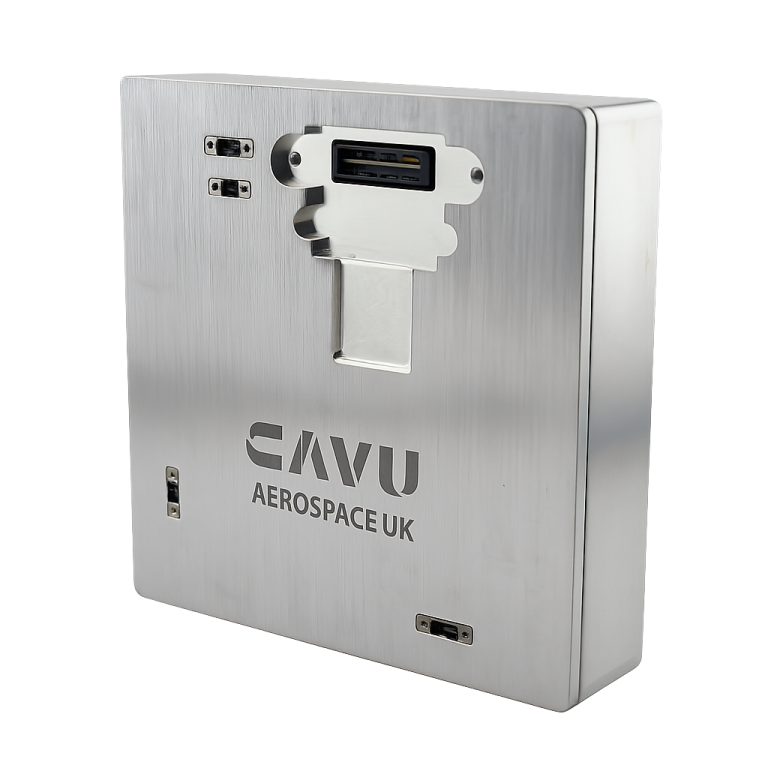
Ground Sample Distance (GSD)
Depending on orbit altitude and optical configuration, our systems deliver:
1.5 m to 10 m Ground Sample Distance
Image sensors have 3.4 Mico meter pixel size. This range supports:
- Broad-area monitoring (10 m class)
- Commercial-grade observation (~3–5 m)
- High-resolution small-satellite imaging (~1.5 m class)
Importantly, GSD is achieved through optical optimization — not megapixel marketing — ensuring physics-driven performance.
Why This Model Matters
Small satellite programs — particularly in the NewSpace sector — require:
- Rapid iteration cycles
- Lower capital exposure during early development
- Reduced procurement risk
- Clear migration path from EM to FM
Our approach enables:
✔ Early system validation
✔ Lower non-recurring engineering cost
✔ Reduced integration risk
✔ Faster time to launch
✔ Scalable performance across mission classes
Built for the New Space Economy
Companies such as Planet Labs and emerging EO operators have demonstrated the power of constellation-based imaging. However, entry barriers remain high for startups, research missions, and institutional programs.
Our affordable EM strategy lowers that barrier.
By providing immediate-access engineering models paired with mission-optimized flight optics, we bridge the gap between laboratory validation and orbit-ready performance.