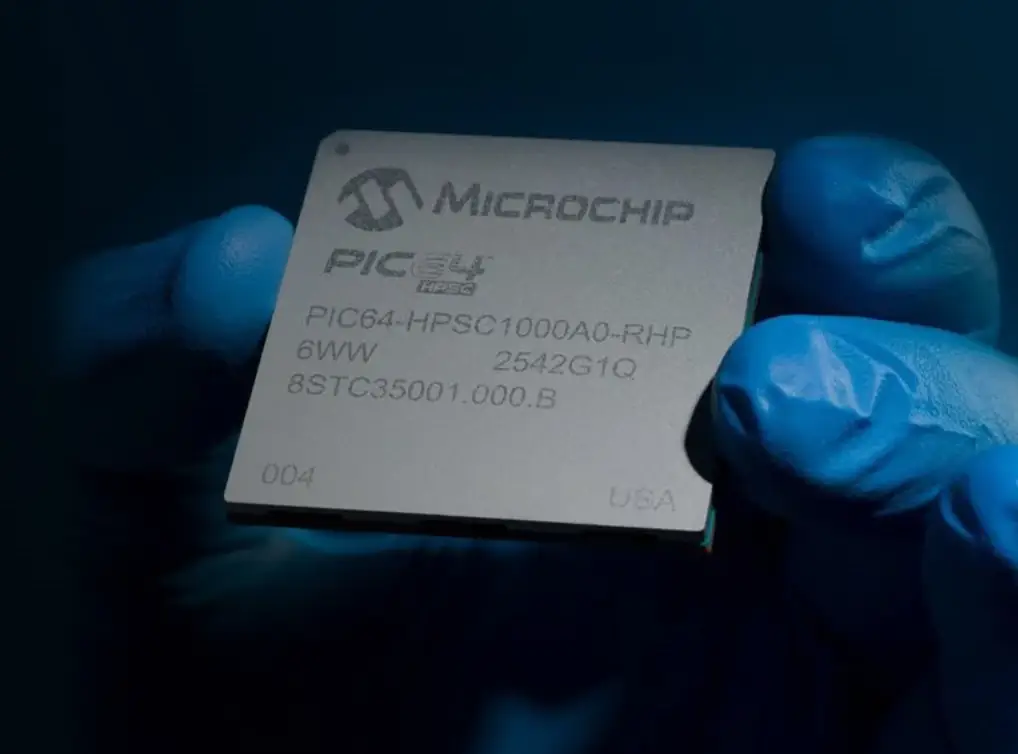
High-Performance Spaceflight Computing 2026
- May 26, 2026
- CAVU Aerospace UK
HPSC is a next-generation system-on-a-chip designed to deliver more than 100 times the computing performance of today’s space-qualified processors.
The HPSC initiative represents a major shift in spacecraft computing architecture. Traditional space processors often prioritize radiation tolerance over computing performance, resulting in limited onboard processing capability. The PIC64-HPSC platform introduces a new generation of radiation-tolerant and radiation-hardened 64-bit RISC-V processing designed specifically for modern space missions requiring:
- autonomous navigation,
- AI/ML inference,
- software-defined payloads,
- high-speed networking,
- onboard image processing,
- and distributed spacecraft computing.
High-Performance Computing- HPSC enables advanced AI and high-speed data processing through scalable vector computing capabilities. These features support the demanding science, autonomy, and real-time decision-making requirements of future space missions.
Power-Efficient Architecture- Designed with space missions in mind, HPSC provides flexible power and performance management. Functions can be selectively powered down or placed into low-power states when not in use, allowing systems to optimize energy consumption dynamically. This adaptability makes HPSC suitable for missions with varying power budgets and changing performance demands throughout different mission phases.
Fault-Tolerant Design- HPSC is engineered to operate reliably in harsh space environments. Its fault-tolerant architecture supports critical mission operations such as autonomous planetary landing, robotic exploration, astronaut support in deep space, and operations near distant or small celestial bodies.
Advanced Error Handling- The processor incorporates robust fault detection and error correction technologies to maintain reliable operation despite radiation exposure, temperature extremes, and other environmental hazards encountered in space.
Real-Time Data Processing- HPSC is capable of processing large volumes of data generated by onboard instruments and sensors. It performs complex calculations and real-time analysis essential for navigation, scientific research, and autonomous spacecraft operations.
High-Speed Connectivity- Using advanced Ethernet-based networking technologies, HPSC can interface with a broad range of sensors and subsystems. Multiple HPSC processors can also be networked together to create larger, more capable computing systems.
Built on Open Industry Standards- At its core, HPSC is based on an open-source, industry-standard instruction set architecture. It combines radiation tolerance, fault tolerance, comprehensive security features, and extensive software support, alongside industry-standard interfaces and communication protocols for broad compatibility and scalability.
The OBC-64 is CAVU Aerospace UK’s next-generation onboard computer platform built around Microchip PIC64-HPSC processors. It is intended for:
- spacecraft command and data handling,
- payload processing,
- distributed onboard computing,
- AI-enabled edge processing,
and high-speed satellite networking
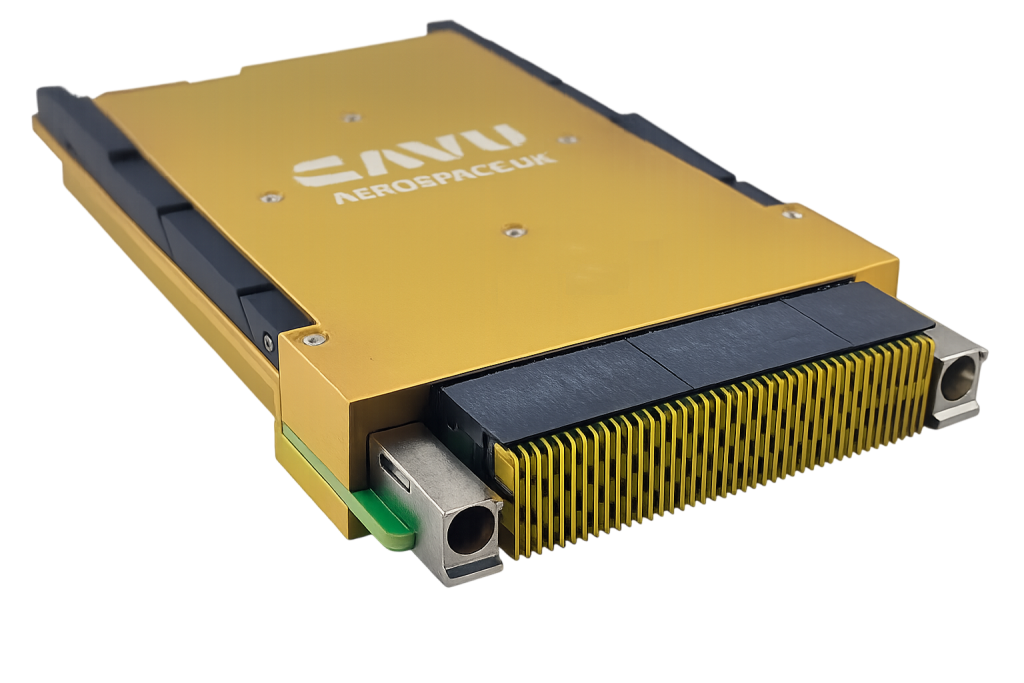
The OBC-64 uses:
- PIC64-HPSC1000 or PIC64-HPSC1100 processors,
- 8× SiFive X280 vector RISC-V cores,
- Plus, a dedicated S7 system controller.
- VPX form factor with several companion boards
- The platform roadmap includes: radiation-tolerant versions (~50 krad), and radiation-hardened versions (~100 krad).
- The architecture includes: DDR4 ECC memory, MRAM, FRAM, NAND, NOR and QSPI storage options
- Supports: 10Gb Ethernet with TSN, PCIe Gen3 ×8, CXL-capable silicon support, SpaceWire interfaces, RDMA/RoCEv2 networking, SPI, I²C, UART, and GPIO interfaces.
The OBC-64 architecture supports:
- clustered SBC configurations,
- RDMA-enabled low-latency networking,
- TSN deterministic Ethernet,
- and multi-board compute scaling
The emergence of the PIC64-HPSC ecosystem represents one of the largest architectural transitions in spacecraft avionics in decades. By combining RISC-V processing, AI acceleration, deterministic networking, virtualization and radiation-tolerant hardware.