The Future of Space Is Starting to Look Like Science Fiction
Credit: NASA, AstroForge, TransAstra
- November 23, 2026
- CAVU Aerospace UK
For decades, science fiction had a strange habit of predicting the future of space better than most engineering roadmaps. Movies showed spacecraft chasing asteroids, robots crawling over alien worlds, giant machines manufacturing things in orbit, autonomous spacecraft making decisions millions of kilometers from Earth, and enormous structures being assembled from raw material found in space. It sounded ridiculous, but now, some of it is becoming an engineering plan. And that leads to a rather interesting idea for anyone thinking about the next generation of space startups: Maybe you should watch more science fiction. Not because the movies are technically correct. They usually aren’t. But because they are very good at asking questions. The most exciting space companies today are increasingly doing exactly that.
Asteroid mining is a perfect example
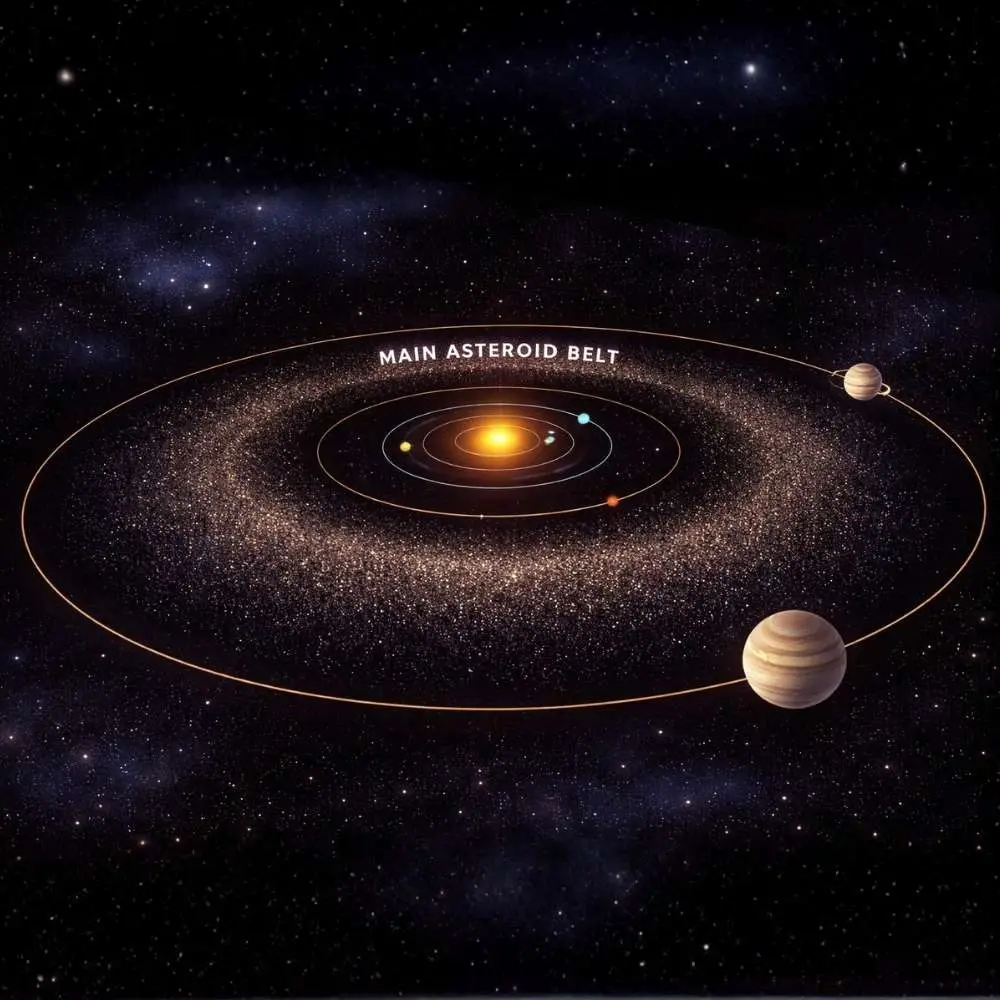
Take asteroid mining. The traditional mental picture is enormous: Build a gigantic spacecraft, send it to an asteroid, land on it, start drilling, process tonnes of material & bring the valuable stuff back to Earth. It sounds like a billion-dollar NASA mission. But start–ups in NewSpace atmosphere are approaching the problem almost backwards with fraction of the time & cost. Obviously failure rate is too high compared to NASA JPL perfect missions on the Mars, Saturn, Grand Tour, but trend is an absolute success. Instead of starting with the mine, they are starting with the asteroid itself. Finding it, going there, Scanning & identify what you need to mine or move it. That sounds obvious, but economically it changes everything.
Imagine an asteroid prospecting company
Imagine that tomorrow we discover 10,000 potentially interesting near-Earth asteroids. You don’t immediately build 10,000 mining spacecraft. You build something much cheaper.
Perhaps a 100–200 kg spacecraft with:
- solar panels
- electric propulsion
- autonomous navigation
- a good camera
- spectroscopy
- communications
- radiation-tolerant computing
- a relatively inexpensive spacecraft bus
You launch it. It flies millions of kilometers, approaches an asteroid &instead of trying to mine it, it simply takes really good pictures. Then it comes home—or perhaps moves on to another asteroid. Suddenly you have something extremely valuable: information leading to executive plans.
You know its size, shape, rotation, surface structure, composition, reflectivity, density estimates, potential metal content, accessibility, required Δv & much more. This is essentially the philosophy behind AstroForge’s DeepSpace-2. Its current spacecraft is a roughly 200 kg, 2 kW platform designed to travel millions of kilometers, rendezvous with a near-Earth metallic asteroid and obtain high-resolution imagery and characterization data. AstroForgesays the platform is deliberately designed to be low-cost, autonomous and flown repeatedly. Their previous Odin mission was even more striking: AstroForge says it built the 105 kg spacecraft in under ten months for about $3.5 million, specifically to demonstrate that deep-space missions don’t necessarily have to carry billion-dollar price tags. That’s a very different philosophy from traditional deep-space exploration.
Once you have identified the good asteroids, the next spacecraft doesn’t need to be a camera. It could be a robotic miner or a drill or something that looks like a giant spider, or perhaps something that looks completely ridiculous by today’s aerospace standards. And this is where the science-fiction mindset becomes useful.
TransAstra is another great example. They are developing something called the Capture Bag—a lightweight inflatable structure intended to capture objects in space. The company has demonstrated the technology on the ISS and is proposing a concept called New Moon, in which a spacecraft would capture a relatively small near-Earth asteroid and move it to a more accessible location. Think about how insane that sentence would have sounded 20 years ago “We’re going to put a giant bag around an asteroid and tow it somewhere useful.” It sounds like something from a 1970s science-fiction movie. And yet somebody is now trying to engineer it.
Detect → Capture → Move → Process
This is perhaps the most interesting way to think about the future of space businesses. That’s not just an asteroid-mining business. It’s an industrial logistics chain for space.
Technology Trend
Trend of Technology is to improve many things at same time to help starting era of abundance for Humanity. Several technological curves are now intersecting. Launch is getting cheaper, solar power is improving, electric propulsion is becoming practical, space-qualified computing is becoming more capable, AI can handle more onboard decision-making, Autonomous navigation is improving, small spacecraft are becoming dramatically more capable. So manufacturing is becoming faster. Put all of those together and something very strange happens.
A spacecraft that would have required a government programme 30 years ago may eventually become a start–up product. AstroForge is even developing autonomous control technology because deep-space missions cannot depend on an army of flight controllers making decisions in real time. Recent reporting says its next-generation spacecraft will use an onboard AI system called Solo alongside conventional deterministic flight software.