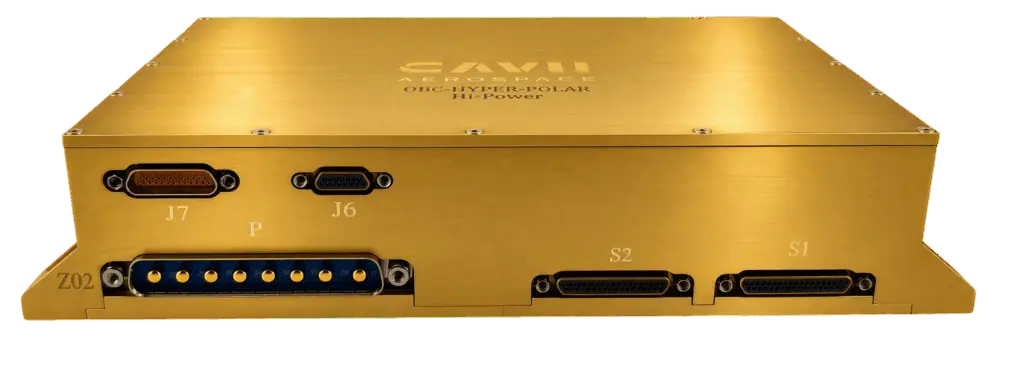
OBC, TCU and Power Distribution System, All in ONE Integrated Spacecraft Electronics
- November 16, 2026
- CAVU Aerospace UK
Spacecraft developers in NewSpace ecosystem are constantly under pressure to deliver more capability while reducing mass, volume, power consumption, integration effort and overall mission cost. Traditionally, many spacecraft functions are implemented as separate electronic units. The On-Board Computer provides computing and spacecraft command and data handling, the Thermal Control Unit manages heaters and temperature sensors, while a Power Distribution and Control or similar power unit distributes electrical power to spacecraft loads. This approach provides clear functional boundaries, but it also creates additional hardware, connectors, harnesses, interfaces, qualification activities and integration work.
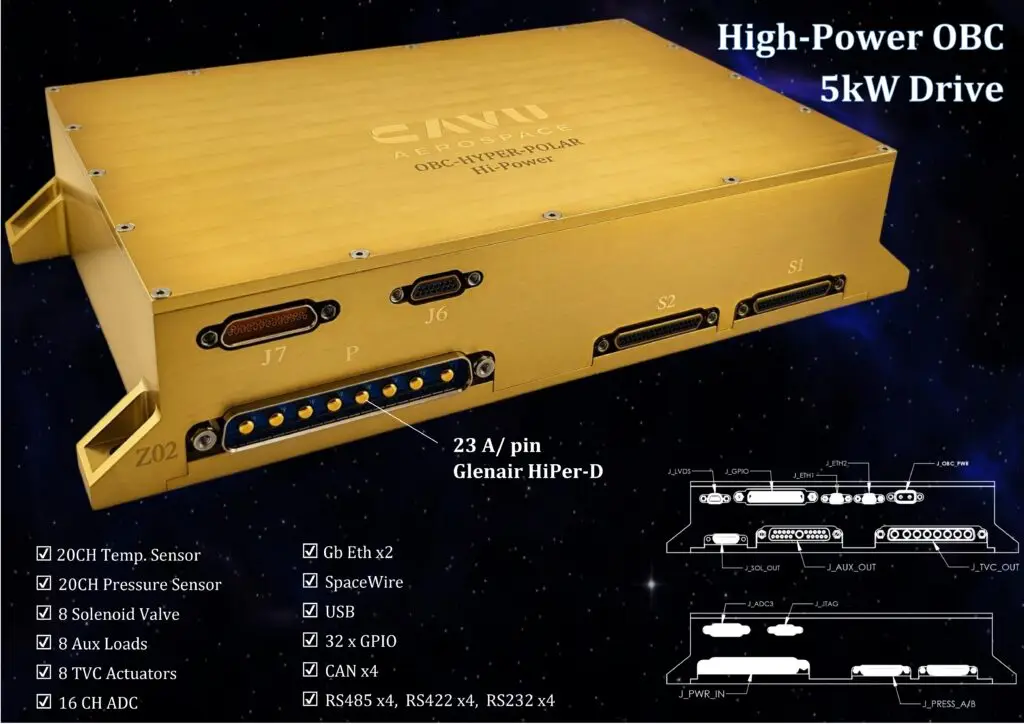
A growing trend among satellite developers is therefore to ask a simple question: Do these functions really need to be three separate boxes? Answer is mostly about reliability cost/ worth & its decision of system developer. In case integrated solution is preferred option for client, we have developed and delivered products based on exactly this philosophy: integrating computing, thermal control and high-power distribution into a single flight electronics architecture, using capabilities by Microchip PolarFire FPGA SoC & GlenairHiPer-D connectors with extreme EMC capabilities. Our OBC-Hyper-Polar with High-Power peripherals provides an example of how this approach can be implemented for high-power spacecraft applications up to 5,000W.
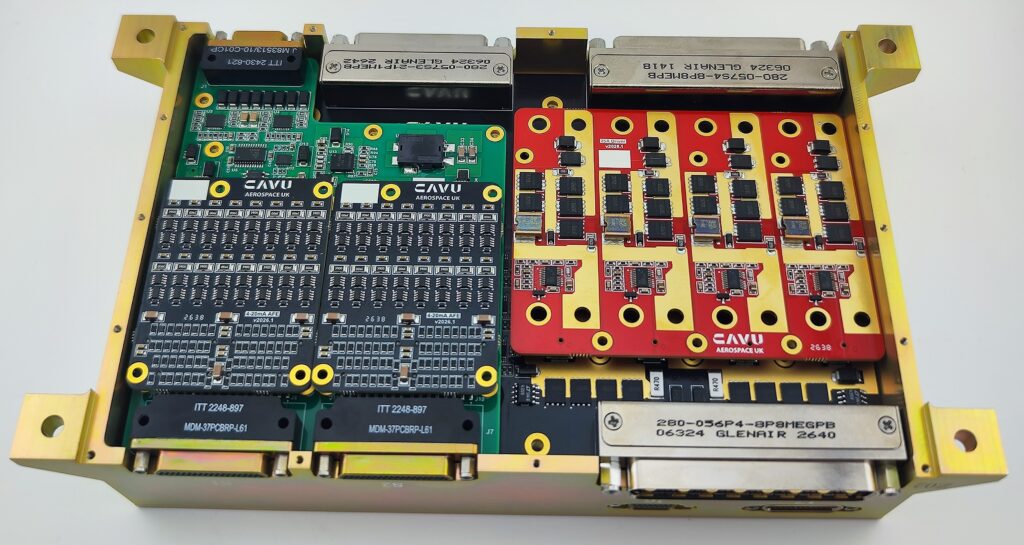
At the heart of the OBC-Hyper-Polar is a Microchip PolarFire SoC-based flight computer, providing the processing, FPGA resources and interfaces required for spacecraft command and data handling. However, the architecture does not stop at computing.
The OBC-Hyper-Polar can be paired with a family of high-power peripheral boards designed to directly control spacecraft loads such as:
- Heaters
- Solenoid valves
- Actuators
- Stepper motors
- High-power electrical loads
- Temperature-control hardware
- Other spacecraft mechanisms
The same architecture can also provide multiple regulated voltage outputs, allowing it to perform functions normally associated with a dedicated power-distribution unit The result is an integrated platform in which the OBC, TCU and power-distribution functions operate as part of the same system architecture. Instead of having a computer in one box, a thermal-control unit in another and a power-distribution unit somewhere else, the spacecraft can use a highly integrated electronics platform designed to perform all three roles.
High-power control without adding another box
One of the key challenges in combining these functions is power handling. A conventional flight computer is generally designed around relatively low-power digital interfaces. Spacecraft heaters, valves, motors and actuators, however, can require significantly higher currents. CAVU addresses this by using dedicated high-power peripheral boards alongside the OBC-Hyper-Polar.
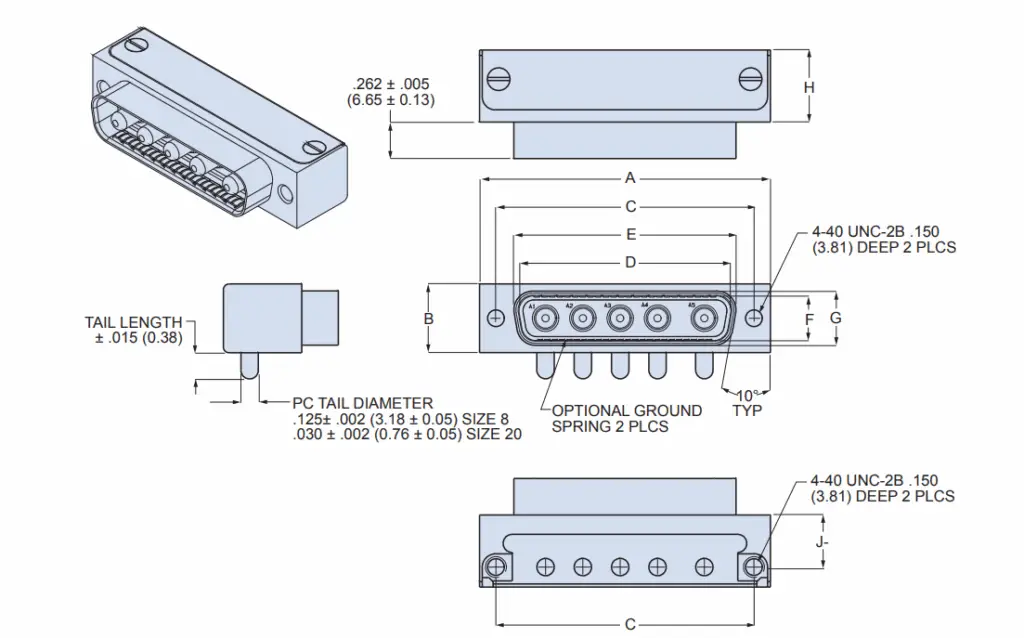
For these applications, we use Glenair HiPer-D Combo connectors, providing up to 23 A per pin while also offering strong electromagnetic compatibility characteristics. This allows high-power loads to be controlled directly from the integrated architecture rather than requiring a separate high-power distribution box. In the appropriate configuration, the OBC-Hyper-Polar architecture can deliver up to 5,000 W of power to multiple spacecraft devices.
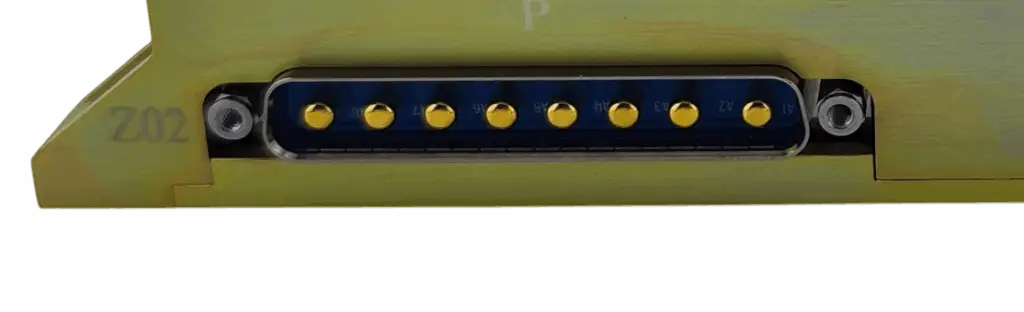
This creates a single platform capable of combining: Computing + Thermal Control + Power Distribution + High-Power Actuation, all within one integrated flight electronics system.
All-In-One
The most important advantage is not simply saving the physical space occupied by two boxes. The real benefit is system-level simplification. When the OBC, TCU and power-distribution electronics are designed as separate units, the spacecraft also needs to accommodate the interfaces between them. That typically means additional:
- Harnesses
- Connectors
- Power interfaces
- Communication interfaces
- Mechanical mounting points
- Enclosures
- Internal cabling
- Software interfaces
- Testing and integration activities
By integrating the functions into one architecture, many of these interfaces can be eliminated or simplified.
1. Lower spacecraft mass– Three independent units generally require three mechanical structures, multiple connector sets and additional harnessing. An integrated unit can combine these functions into a common mechanical and electrical architecture. For spacecraft where every kilogram matter, reducing the number of boxes and associated harnesses can provide a significant mass advantage.
2. Reduced volume– Spacecraft electronics increasingly compete for limited internal volume. Combining the OBC, TCU and power-distribution functions allows the mechanical design to be optimised around the system rather than around three independent products. CAVU’s integrated OBC-Hyper-Polar configuration can provide these capabilities in a compact package of approximately 180 × 120 × 38 mm, with a total mass of around 2 kg. This provides a high level of computing, control and power capability within a very compact volume.
3. Less harnessing– Harnesses are often underestimated during spacecraft design. Every additional box requires electrical and data connections. When power distribution, thermal control and computing are physically separated, significant wiring can be required between the units. Integrating these functions means that many of these connections can remain internal to the electronics architecture. The result can be fewer cables, fewer connectors, fewer interfaces which means simpler spacecraft integration & less path to failure. This is particularly valuable for missions with a large number of heaters, valves, motors and other controlled loads.
4. Fewer connectors and interfaces– Connectors are not simply mechanical components. They introduce mass, cost, assembly requirements, potential failure points, EMI/ EMCconsiderations & integration effort. A conventional architecture may require dedicated interfaces between the OBC, TCU and power-distribution system. With an integrated architecture, these internal interfaces can be designed into the electronics from the beginning. The spacecraft developer can therefore interact with the system through a more consolidated set of external interfaces.
5. Reduced integration complexity– Spacecraft integration becomes increasingly complicated as the number of independent electronic units increases. Combining multiple functions into one flight unit can reduce the number of independent items that the spacecraft team needs to integrate. This does not eliminate qualification requirements, but it can simplify the overall system architecture and reduce the number of interfaces that need to be managed.
There is also a significant architectural advantage to having computing, thermal control and power distribution closely integrated. The OBC already understands the spacecraft’s operating state. It knows whether the spacecraft is in safe mode, performing an observation, communicating with the ground, operating an actuator, managing a thermal event or entering or leaving a high-power operating mode. When the thermal and power-control functions are part of the same architecture, the spacecraft can make these decisions without relying on multiple independent boxes and communication paths. For example, the flight computer can coordinate spacecraft mode → power availability → heater control → actuator operation → thermal response → fault management, as part of a unified control architecture. This can be particularly valuable for spacecraft with demanding thermal environments or high-power mechanisms.
High-power loads in the same architecture
The integrated approach is especially attractive for missions with significant numbers of electrical loads. A spacecraft may require simultaneous control of dozens of heaters, solenoid valves, several stepper motors, actuators, temperature & pressure sensors, payload equipment, high-power electronics & auxiliary spacecraft systems. Traditionally, these functions could be distributed across several dedicated electronics units.
The OBC-Hyper-Polar architecture allows many of these functions to be brought together around a common flight computer and high-power peripheral architecture. With configurations capable of handling up to 5,000 W, the system is intended for applications where the spacecraft requires substantially more than conventional low-power OBC I/O can provide.