
Update on OBC-64,
Why We Combine Microchip’s PIC64-HPSC with PolarFire FPGA
- September 15, 2026
- CAVU Aerospace UK
Space hardware development is full of waiting. Building new processor especially one with spec of PIC64-HPSC is not easy to reach. Test & verifications can take ages more than expected. Space Computing world is waiting for the next generation of processors to become commercially available. But for a young hungry manufacturer, there is another option.
Build. Learn. Adapt. Move forward.
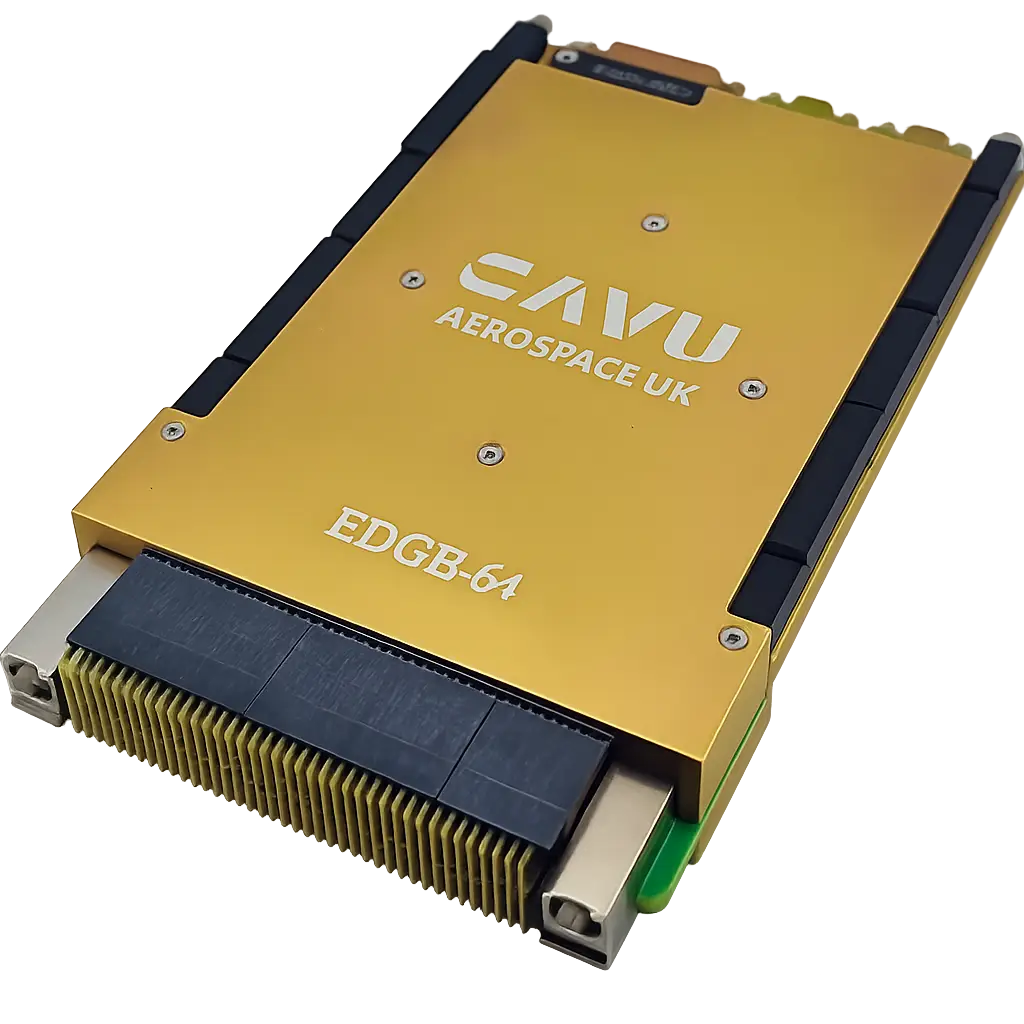
That is exactly the approach we have taken with OBC-64, our next-generation onboard computer based on Microchip’s PIC64-HPSC processor. As a Microchip design partner & participant in the JPL- Microchip High-Performance Spaceflight Computing (HPSC) program, CAVU Aerospace has received engineering-model of the PIC64-HPSC and already developed the OBC-64 EM around this new generation of space computing architecture. The processor is, quite simply, a monster. With eight RISC-V SiFive® X280 vector cores, approximately 26K DMIPS-class performance, up to 2 TOPS of INT8 computing, and extensive high-speed I/O including eight SpaceWire ports, PIC64-HPSC represents a major step forward in onboard computing capability.
But the engineering-model chip is still under development, and not fully functional. We considered three options.
Option 1: Wait
Not a good choice for young, impatient team with great appetite.
Option 2: Build a limited OBC just to have something
That would give us a HPSC OBC EM, not fully functional, basically a waste of resources. That’s not us. Plus isn’t optimum cost/worth for a client buying an engineering model. We can do better; we have solved bigger problems. So, again not for us.
Option 3: Add PolarFire
How about adding a PolarFire FPGA to OBC-64 & make it fully functional EM, plus much more capable for flight models with little extra cost. Better in process, more reliable operation, more advanced interface capability & faster development.
Plus, CAVU Aerospace already has extensive experience developing several space computers around PolarFire technology in different form factors from CubeSat, SmallSat to Rad. Hard. Computers & orbital AI machines. We have developed multiple PolarFire-based onboard computers, together with their associated BSPs, drivers, communication modules and software infrastructure. So, it wouldn’t be big challenge for us in developing & integration stage. So we picked this option & first of many OBC-64 is out.
Two processing worlds. One OBC.
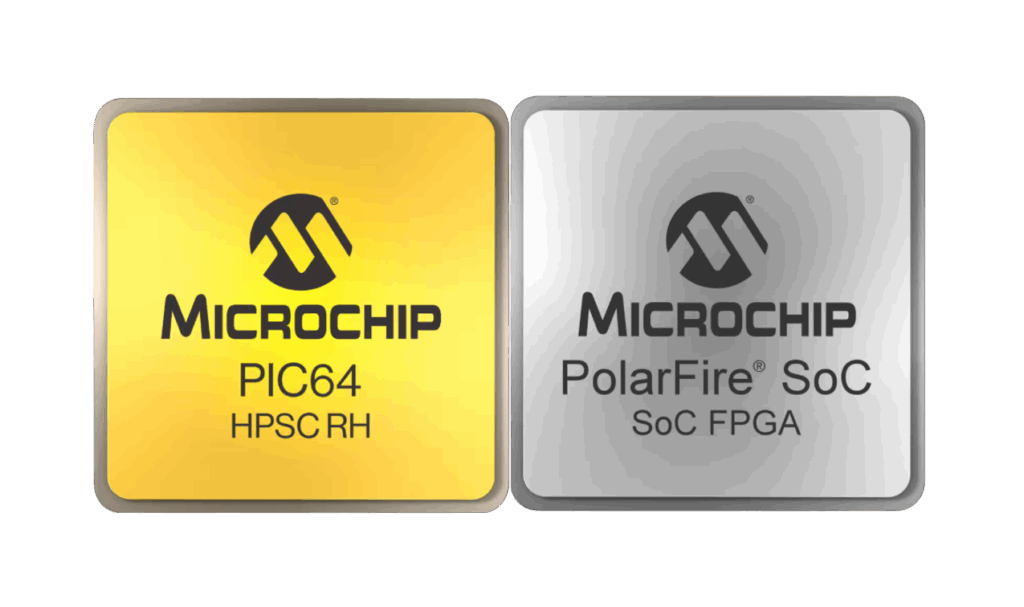
The new OBC-64 architecture combines PIC64-HPSC + PolarFire FPGA
Rather than viewing the FPGA as a temporary solution for an engineering-model limitation, we see it as an opportunity to create a much more capable architecture. The PIC64-HPSC brings enormous general-purpose and vector-processing capability to the computer.
The PolarFire FPGA brings something different:
- Highly deterministic processing
- Extensive configurable I/O
- Hardware acceleration
- Real-time control
- Custom interfaces
- Parallel processing
- Established space-computing heritage
- A mature CAVU software and BSP ecosystem
Together, they create an architecture that is significantly more flexible than either device operating alone. The FPGA can handle interfaces and processing functions that are not yet available on the engineering-model PIC64-HPSC, while the HPSC provides the high-performance compute capability that defines the next generation of the OBC-64. This means our engineering model is not a crippled version of the future product. It is a functional development platform.
Why PolarFire?
For us, this decision was not simply about putting an FPGA on a board. It was about selecting the right FPGA. PolarFire has already become a flight proven fully developed technology platform within CAVU Aerospace’s onboard-computing portfolio. We have already invested heavily in:
- PolarFire-based computer architectures
- Board Support Packages
- Bare-metal drivers
- Linux support
- Communication modules
- SpaceWire implementations
- Peripheral interfaces
- FPGA firmware
- Development and verification infrastructure
That existing knowledge dramatically reduces development risk. Instead of developing an entirely new FPGA ecosystem alongside a new processor, we can bring a mature technology platform into the HPSC architecture. We know the silicon. We know the tools. We know the architecture. We know the software. And most importantly, we know how to turn it into a space computer.
The headline specifications of PIC64-HPSC is by far the best processor in the market.
- Eight RISC-V SiFive® X280 vector cores.
- ~26K DMIPS-class performance.
- Up to 2 TOPS INT8.
- Eight SpaceWire ports.
But space missions don’t buy processor benchmarks. They buy systems. We paired PolarFire with few NVIDIA Jetson GPUs to make AI-enabled OBC & it worked! A satellite or spacecraft needs to communicate with sensors, payloads, storage, radios, actuators and other computers. It needs deterministic behaviour. It needs interfaces. It needs software. It needs fault management. It needs development tools. It needs a path from engineering model to flight hardware. That is where the combination of HPSC and PolarFire becomes particularly interesting. The processor provides extraordinary computing power. The FPGA provides configurable hardware capability. And CAVU provides integrated architecture in VPX form factor and software infrastructure that connects the two.
The result is a new generation of CAVU onboard computer, new version of OBC-64 to be released for commercial purposes, combining the extraordinary computing capability of PIC64-HPSC with the flexibility and configurability of Microchip PolarFire FPGA. For the engineering model, this gives customers a much more useful platform for software development, interface integration and system-level testing. For the future commercial and flight versions, it creates an architecture capable of addressing missions with increasingly demanding onboard processing requirements.